Introduction
This is a highlight article of the Chinese comedy drama No Pain No Gain, written in a format following the company’s success (what was seen by the employees and the public), and the CEO’s scheme (what was plotted by the protagonist as seen by viewers). The scheme or behind-the-scenes parts are hidden in spoiler tags. If not explained, we know the protagonist always wanted the company to lose, so he would get money.
In my opinion, the drama has a high-quality comedy value, with plenty of background jokes or nuanced performances discovered upon repeat viewing. I still laughed hard even by rewatching it in a short period. I usually don’t have time to rewatch a drama, especially romance and mystery genres, no matter how much I love those genres. Once a couple gets together, the story loses its thrill. Once a mystery is revealed, the story loses its suspense. However, I will definitely find time to rewatch this comedy as an “electronic pickle” (电子榨菜, dian zi zha cai) to accompany meals. Therefore, guidance on which part or episode to watch is needed.

Drama Info
Drama title: No Pain No Gain (Native title: 年少有为)
Alternative titles: Nian Shao You Wei, The Richest Poor Guy, Young and Promising
Genres: Comedy, Business
Aired: 31 January, 2026 - 12 February, 2026
Episodes: 26 |  Duration: 43 min.
Directors: Zhao Qi Chen (赵启辰) and Liu We Yang (刘闻洋)
Screenwriters: Ding Lu (丁璐), Ji Sang Rou (纪桑柔) and Zheng Zhuo Qun(郑卓群)

Adapted from the web novel "Losing Money to Be a Tycoon" (亏成首富从游戏开始) by Qing Shan Qu Zui (青衫取醉).
Where to read English subbed novel: MyDramaNovel

Where to watch: WeTV and KUKAN
OST
The OSTs, surprisingly, fun to listen to. My favorite one is “Newborn” (sung in English) by Jeffrey, a Taiwanese singer/actor who is also Jackie Chan’s nephew.
童话船 (“Fairy Boat”) by Tia Ray/Yuan Ya Wei (袁娅维) – Theme song
“Newborn” by Jeffrey (董又霖) – Closing theme/insert
“Shadow Dancing” by Mika (米卡) – Closing theme/insert
未完成 (“Unfinished”) by Shen Yi Cheng (沈以誠) – Closing theme/insert
万物盛开法则 (“The Law of All Things Blooming” by Da Zhang Wei/Wowkie Zhang (大张伟) – insert song
散去的時候 (“When They Dispersed”) by Deca Joins – insert song
早安 (“Good Morning”) by Cao An (早安) – insert song
时间如水 (“Time is Like Water”) by Cao An (早安) – insert song
Trailer
Synopsis
After being fired from a major corporation, office worker Pei Qian receives an unexpected offer from a mysterious tycoon to start a company with a single goal: Losing money. He assembles a team of unreliable misfits and launches the “Pei Qian Plan”, deliberately raising salaries, extending holidays, offering generous benefits, and investing in one absurd project after another in hopes of failure. Instead, every attempt backfires into success, turning losses into profits again and again. Pei Qian becomes a celebrated boss among his employees and a recognized business prodigy in the industry, while he himself suffers from getting rich against his will. With no escape, he continues searching for new opportunities to turn the tide and finally… (Source: WeTV)
Characters
Relationship Chart
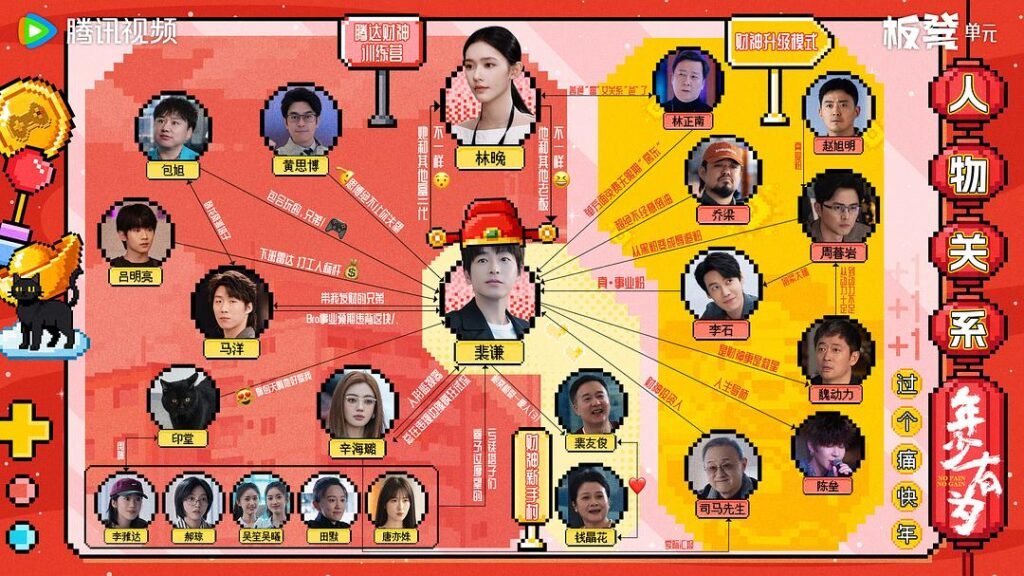
Light yellow: Pei Qian and his mom and dad.
Orange are Tengda’s employees. From above Pei Qian (counter-clockwise): Lin Wan, Huang Sibo, Bao Xu, Lv Mingliang, Ma Yang, Yin Tang (Pei Qian’s cat), Xin Hailu.
Bottom row: Li Yada, Hao Qiong, twins Wu Sheng and Wu Xi, Tian Mo, and Tang Yishu.
Dark yellow are outsiders. First column: Lin Zhengnan (Lin Wan’s father), Zhu Qiaoliang (game reviewer), Li Shi (investor), Mr. Sima (investor).
Second column: Zhao Xuming (Zhou’s assistant), Zhou Muyan (Sky Fire boss), Wei Dongli (Zhou’s subordinate), Chen Lei (singer).
Main Characters
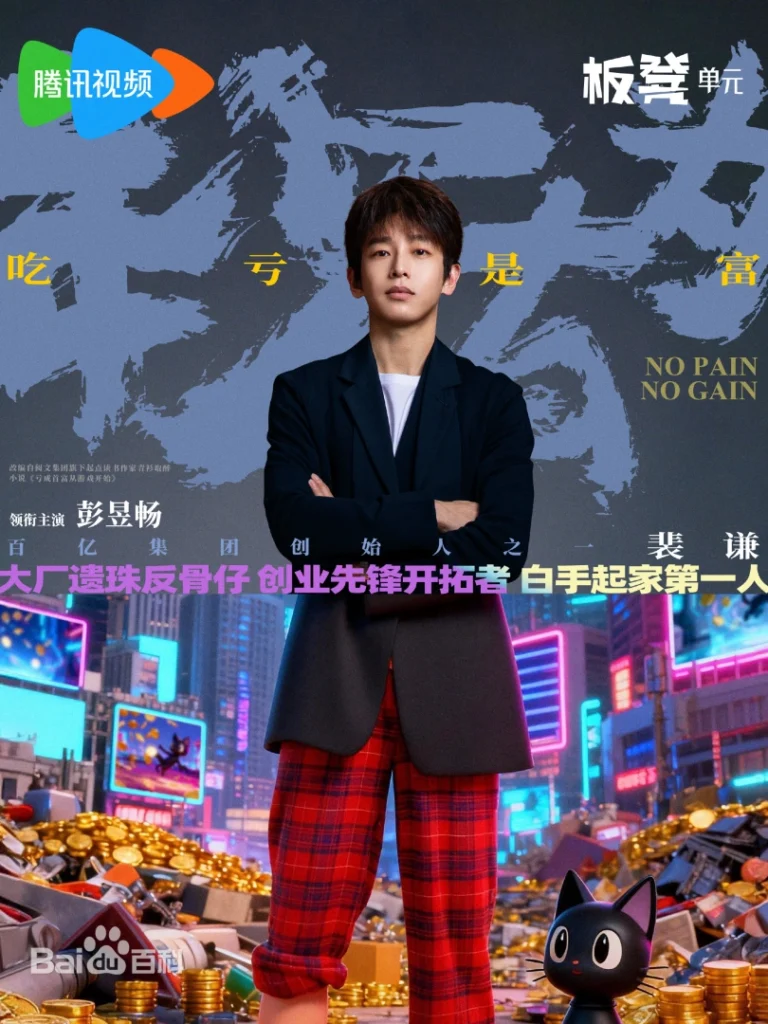
Peng Yu Chang (彭昱畅) as Pei Qian

Jelly Lin/Lin Yun (林允) as Lin Wan
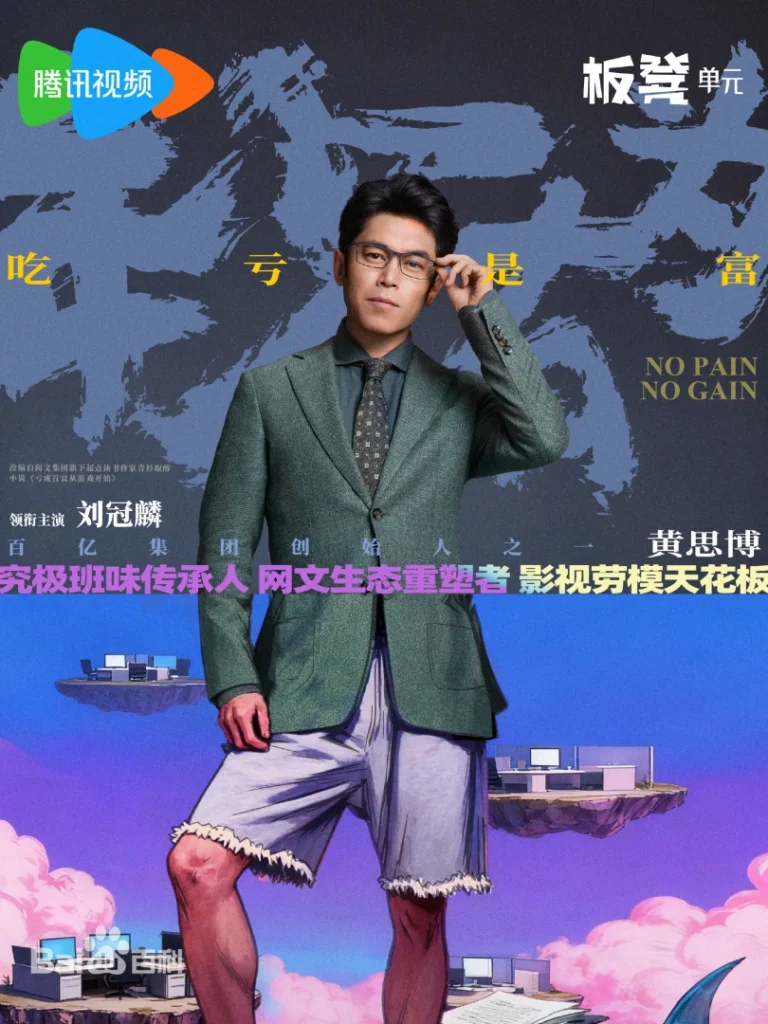
Liu Guan Lin (刘冠麟) as Huang Si Bo
Supporting Characters
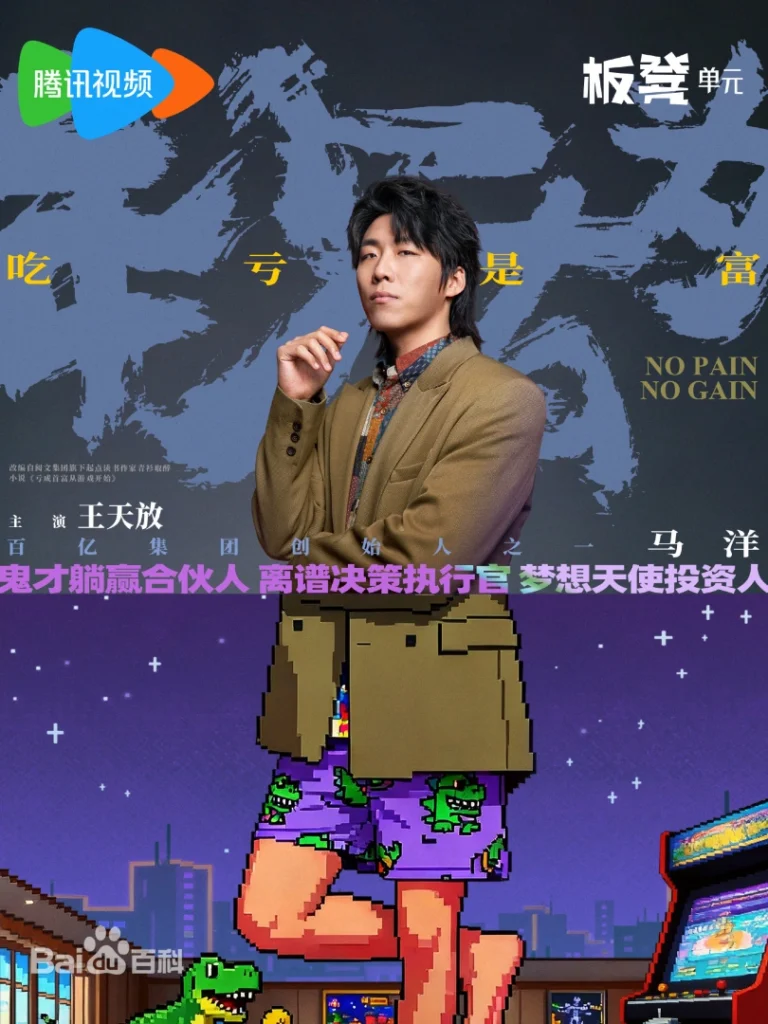
Ma Yang (Wang Tian Fang)

Xin Hai Lu (He Rui Xian)
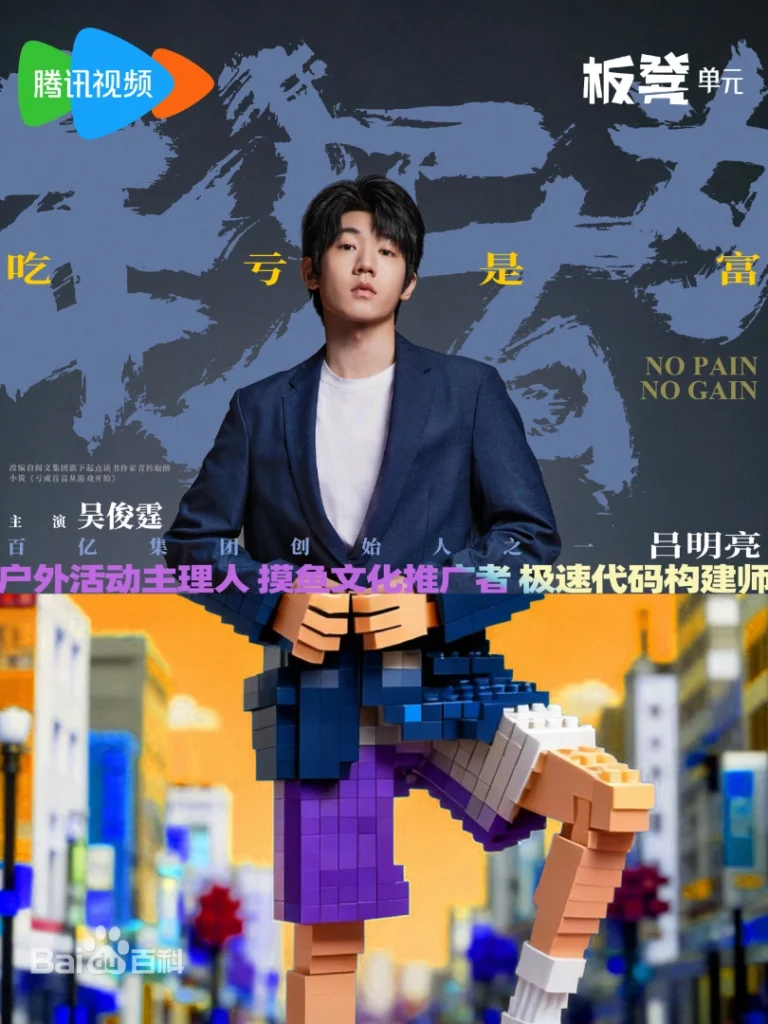
Lv Ming Liang (Wu Jun Ting)
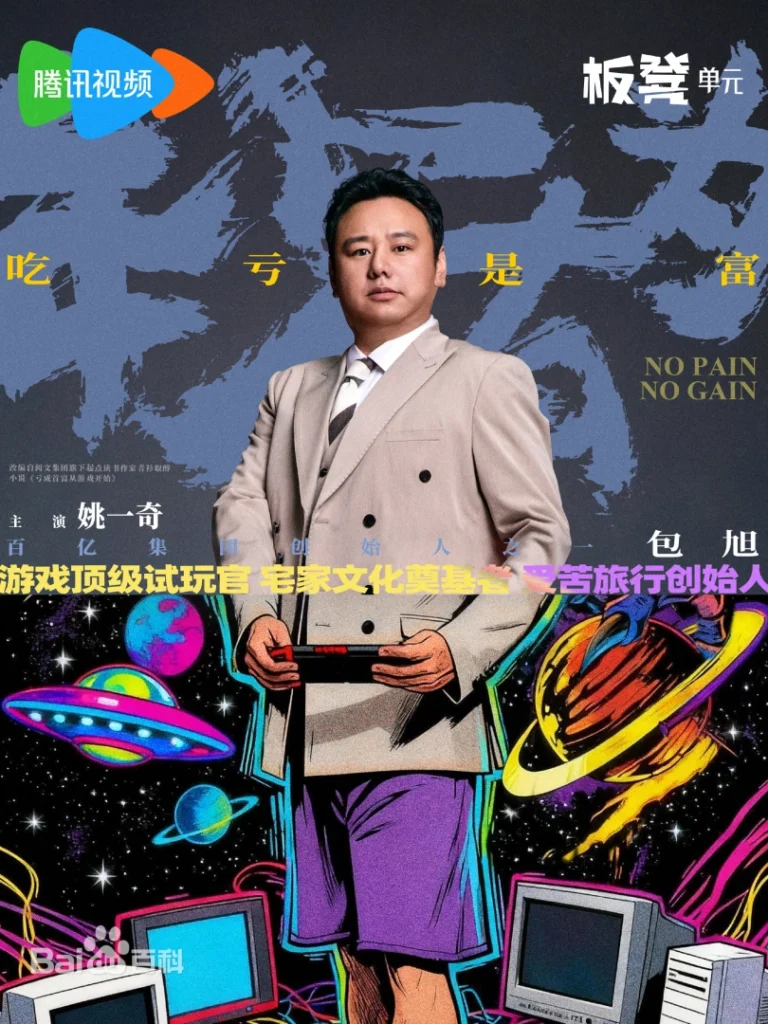
Bao Xu (Vinnie Yao)
My Rating
My rating for this drama was based on MyDramaList’s scoring system, which is from 0.0 to 10.0. For any drama/movie/show I completed, I gave a minimum rating of 6.0 to appreciate the hard work of the production team, and to adjust to MyDramaList’s overall score base. From 6.0, this drama has additional scores of:
+2.0 for the story and plot:
- +0.5 for the refreshing story and a rare business-focused drama without heavy melodrama or excessive romance, and a satire for the 9-9-6 or the heavy reality of work life.
- +0.5 for the tight/fast plot with many arcs, with satisfactory ending
- +0.5 for the rewatch value.
- +0.5 for other positive aspects in the story/plot: the wise words worthy of quotes, teamworking, friendship, morale boosting, and the beautiful element of ancient poetry in the “Returning to Shore” game arc (Easter Egg in Ep 12)
+1.0 For characterization and acting:
- +0.5 for the protagonist character and acting. Pei Qian’s misery induces schadenfreude effect on the audience — the experience of pleasure, joy, or self-satisfaction derived from learning of the troubles, failures, or humiliation of another — is a fundamental, often essential, element in comedy-drama. Peng Yuchang is born for this kind of role; he acted in comedy as well as melodramatic dramas/movies flawlessly.
- +0.5 for the variety of characterization besides Pei Qian, who many show as the “leftovers” in the workforce, and their character growth to succeed. The online game reviewers with their comments enriched the drama.
+1.0 for the visualization:
- +0.5 for the cinematography, for example, the camera panning to contrast the difference in Pei Qian’s loneliness compared to his employees’ gathering. Or the lighting choice: dark, crowded office setting in Sky Fire compared to the bright and spacious office setting in Tengda.
- +0.5 for the CGI of the role-playing games they made.
Thus, my final rating is 10.0/10. Perfect!
The Company’s Success and the CEO’s Scheme
The Tengda Group (Ep 1)
Tengda (腾达 – téng dá) in Chinese means “to rise, to soar, or to achieve rapid advancement in one’s career and power”. Its creed, “Stay true to our mission, succeed for the greater good”, was the founder’s personal mission. Its logo, a black game pad with yellow lights, resembles Pei Qian’s lucky charm black cat, Yin Tang, which he rescued during the time after he was fired from his old job and before he established Tengda. Yin Tang became the company’s Chief Motivation Officer.
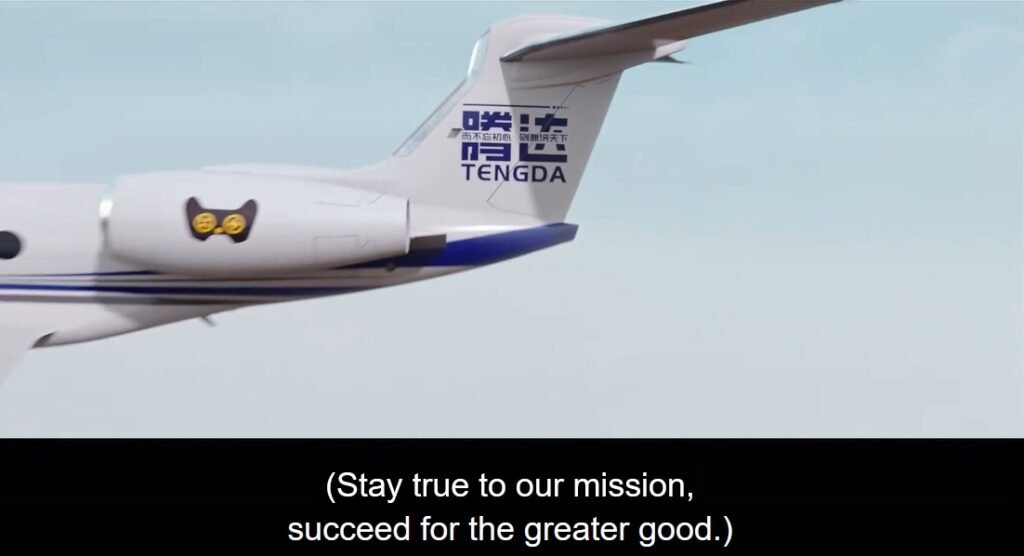
Tengda Group consists of the parent company, Tengda Games, and its various subsidiary corporations in real estate, food and beverage, filming and television, and logistics. Pei Qian independently developed his first game many years ago in the bedroom of his shabby rental apartment, which became a smash hit upon release, leading Tengda to its first step toward success. In the eyes of others, Pei Qian achieved success at a young age and became a legend.
The Beginning (Ep 1)
Tengda was established in 2022. At that time, Pei Qian was a corporate slave at Fuhui Group. Dissatisfied with the working situation, he wrote a list of grievances against the firm in “Fuhui Job-Security Survival Manual”, and distributed it among the employees. His action caused him to be fired.
Behind the sceness
Pei Qian was approached by Mr. Sima, the chairman of the powerful Jinghong Group, after reading his grievances list against Fuhui and monitoring him for some time. At that time, Jinghong was stagnant, and Mr. Sima saw potential in Pei Qian’s unconventional mindset. Mr. Sima proposed that he would invest ¥ 1 M in Pei Qian and asked him to set up a company. If the company loses money, he can get as much as he loses. If the company makes a profit, he can only get a basic salary of ¥ 5,000 a month (which basically only covers 1 monthly rental in a humble apartment). After checking Mr. Sima’s background with the police, Pei Qian accepted the offer and signed the confidentiality agreement. He could not disclose the facts of this project to others. Mr. Sima also assigned his special assistant, Xin Hailu, to help and monitor Pei Qian.
After obtaining the funds, Pei Qian recruited his best friend, Ma Yang, as the Vice CEO. Together, they recruited Bao Xu, their schoolmate, as the game tester.
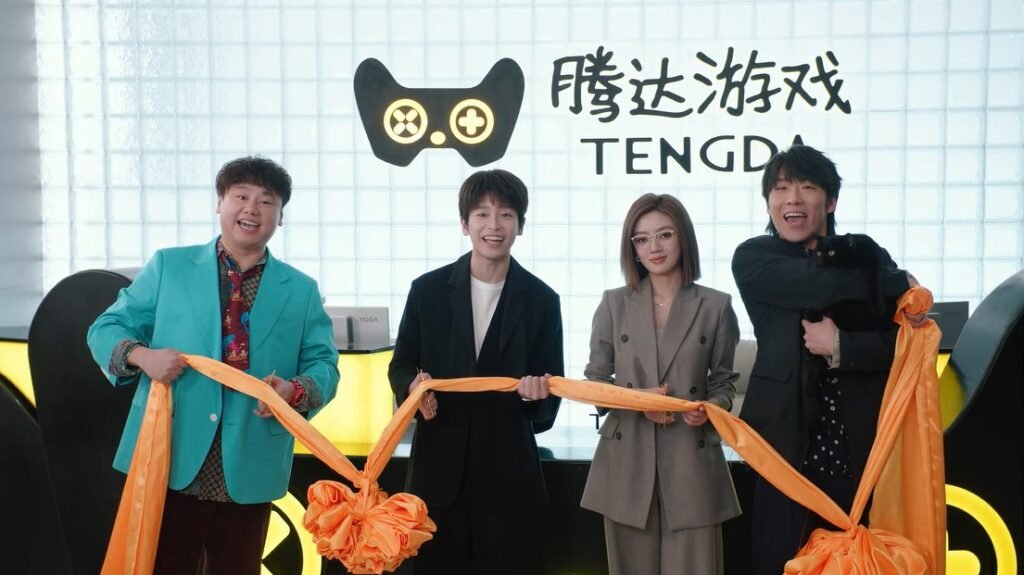
From left to right: Bao Xu, Pei Qian, Xin Hailu, Ma Yang, holding Yin Tang, the cat, at Tengda’s inauguration day.
Pei Qian’s scheme
Ma Yang was a loser who never worked formally after graduation. He helped his family run a food stall, but he was not even good at it.
Bao Xu was another loser who never left the internet cafe since graduation, aka never formally worked anywhere.
The Lonely Road (Ep 1 to 2)
One month after Tengda officially started, its first game, The Lonely Road, was launched without promotion. It was discovered by a prominent online game blogger, Zhu Qiaoliang. The first level was very simple, but the second level became inexplicably difficult to pass. After spending eight gruelling hours mastering and finally clearing Level 2, Zhu Qiaoliang and his assistant read the mocking message below.
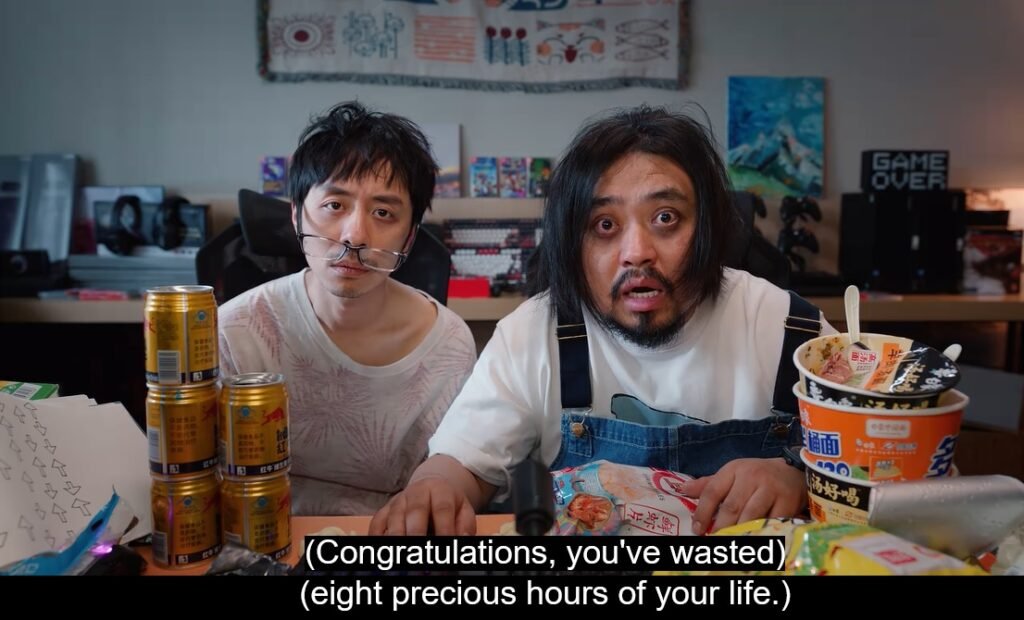
Zhu Qiaoliang made an angry review trashing this game. His vlog went viral with a lot of likes. The gamers realize The Lonely Road has a valuable message about time-wasting, and they begin to contemplate their life. Other gamers were challenged to beat every level.
Pei Qian’s scheme
He selected The Lonely Road as the worst from his rejected game projects while he was working at Fuhui. He even wrote a very boring introduction: “Driving on a road”.
Tengda’s Core Employees (Ep 2)
Following the success of The Lonely Road and the plan to make more games, Pei Qian decided to hire more employees.
- The twins Wu Sheng and Wu Xi – receptionists
- Huang Sibo – Product Manager
- Lv Mingliang – programmer
- Li Yada – programmer
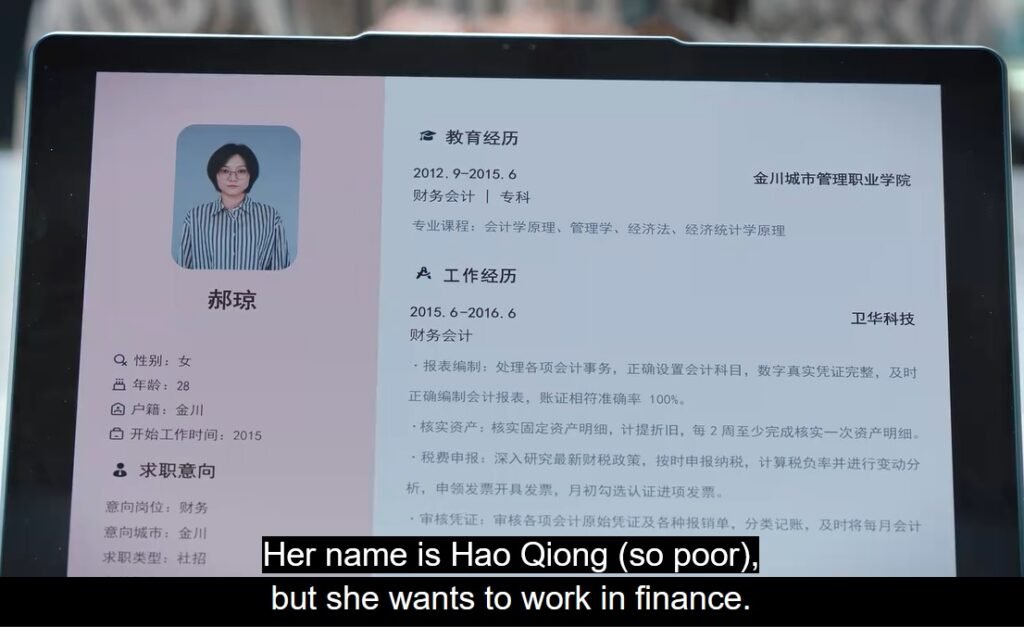
- Hao Qing – finance
- Yun – HR
- Two guys (no name) – design
Pei Qian’s scheme
Some who were hired were unqualified for Tengda, either slackers, losers, or leftovers in the job market. The others were hired because he felt pity, not based on qualifications.
- The twins were hired to double the employment cost.
- Huang Sibo hadn’t been promoted in his previous company for six years before being laid off.
- Lv Minglian was a slacker and unconcerned, who was only interested because Tengda promised no overtime and weekend work. He hopped 28 jobs in one year, and none lasted a week.
- Li Yada was indifferent during the interview until she saw Yin Tang, since she was a cat enthusiast. I think Qian hired her to take care of the cat.
- Hao Qiong, had been interviewed by 10 companies but nobody hired her because her name means “very poor” (好穷).
- Yun was a housewife who hadn’t worked for 20 years.
- The two guys appear to be color blind, but different colors.
Tengda’s Employment Policy – That Makes You Want to Work There! (Ep 2)
- There is no probation period, everyone is a permanent employee.
- Tengda payroll is transparent. If anyone is happy because they earned less than their colleagues, they can ask for a raise.
- Encourage small talk and ban leaders for big talk. Employees are encouraged to gossip during meetings.
- Employees must use the company’s gym and entertainment facilities for at least four hours a week for physical and mental health.
- On the first day employees return from a weekend or holiday, they may decide what time they come to work.
- Working overtime is strictly prohibited.
- For holidays, the company implements a consecutive holiday system. If a public holiday falls on a weekend, it will be replaced on weekdays. Workdays are not replaced.
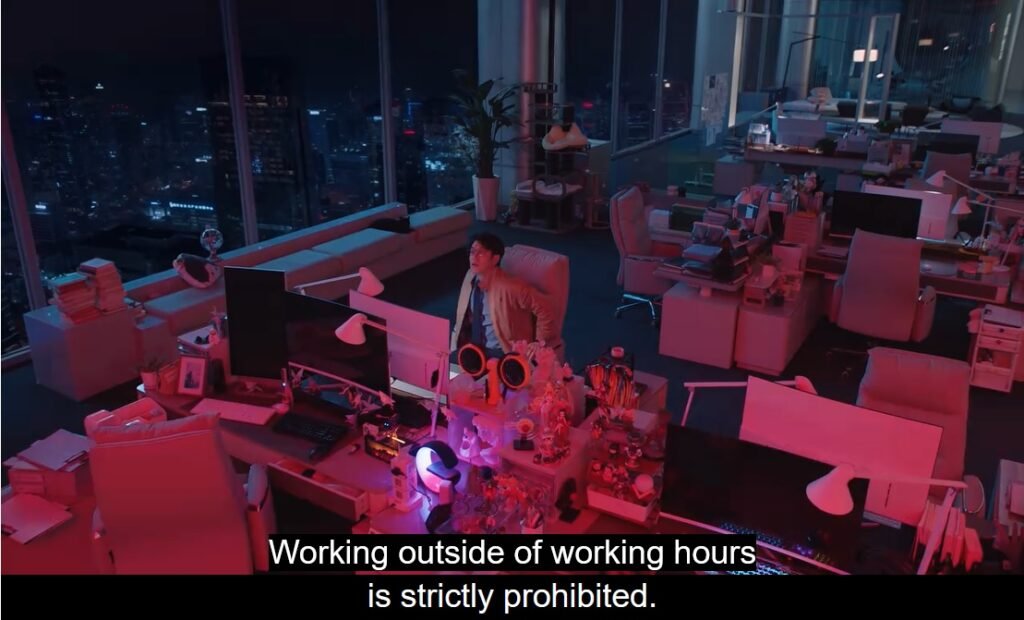
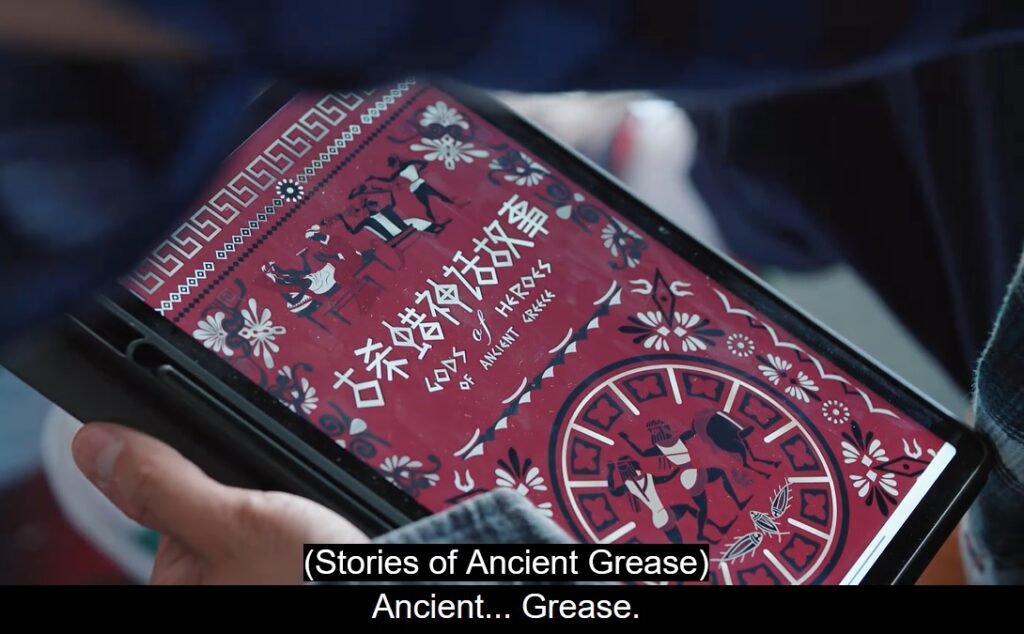
Divine General Pact (Ep 2 to 4)
Divine General Pact, Tengda’s second game, Ma Yang’s idea, based on a pirated Greece Mythology book he read.
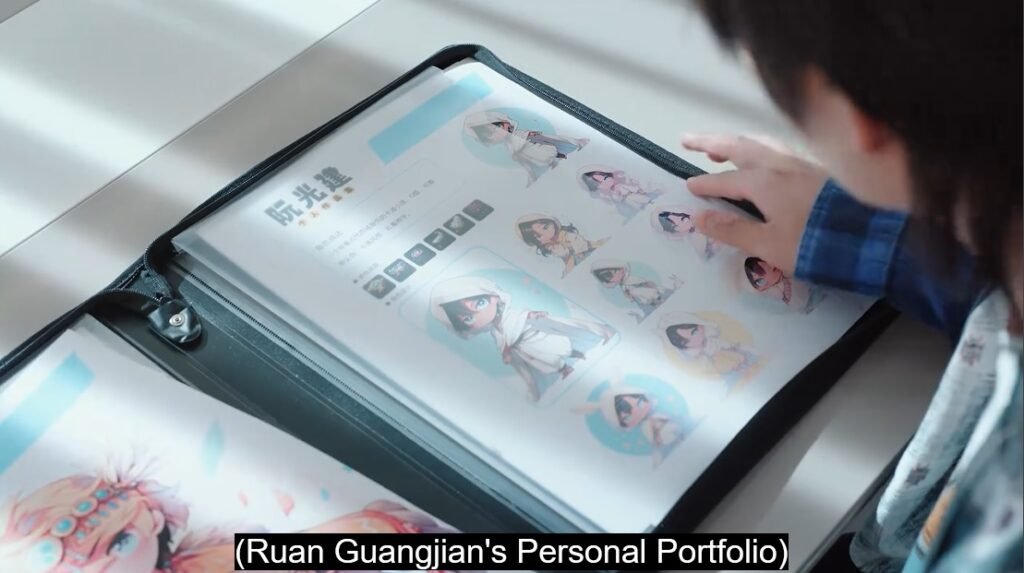
Ruan Guangjian, a freelancer, was commissioned to be the concept artist.
Pei Qian’s scheme
Qian schemed for a loss by creating a second game with such an old-fashioned card game idea and wrong Greek mythology characterization, and paid Ruan Guangjian handsomely.
Ruan’s art style was Q-version characters, which didn’t fit with the dark theme of the game. Q-version characters (Q版) are chibi-style, cartoonified, or infantilized artistic representations of people, animals, or objects, often featuring exaggerated, cute, and simplified features, such as large heads and small bodies.
The simple card game Divine General Pact had unexpectedly surged to the top of the charts. Various game bloggers praised it for its sincerity, making the game just for players to have fun. Unlike competitors, this game charged only a ¥ 10 lifetime fee and gave players 100 free card draws every day, an anti-addiction feature, and SSR, which made all players equal. SSR refers to Special Super Rare or Super Super Rare, a top-tier classification for characters, weapons, or items, particularly in gacha and RPG titles. These items feature low drop rates, superior stats, and unique abilities, making them highly coveted for competitive players.
Behind the sceness
Although not permitted to work overtime, Huang Sibo, Lv Mingliang, and Bao Xu secretly refined the game during Tengda’s team building and study tour to other gaming companies.
Lin Wan Joined Tengda (Ep 4)
Tengda visited Sky Fire, a prominent gaming company that was a subsidiary of Fuhui, Pei Qian’s former workplace. They were welcomed by Lin Wan from the Planning Department of Sky Fire. Her boss, Zhou Muyan, tasked her to be a host for Tengda to get rid of her pestering him with her ideas. Seeing how great the employee relations are, and that Tengda’s philosophy matched hers. Lin Wan resigned from Sky Fire and joined Tengda.
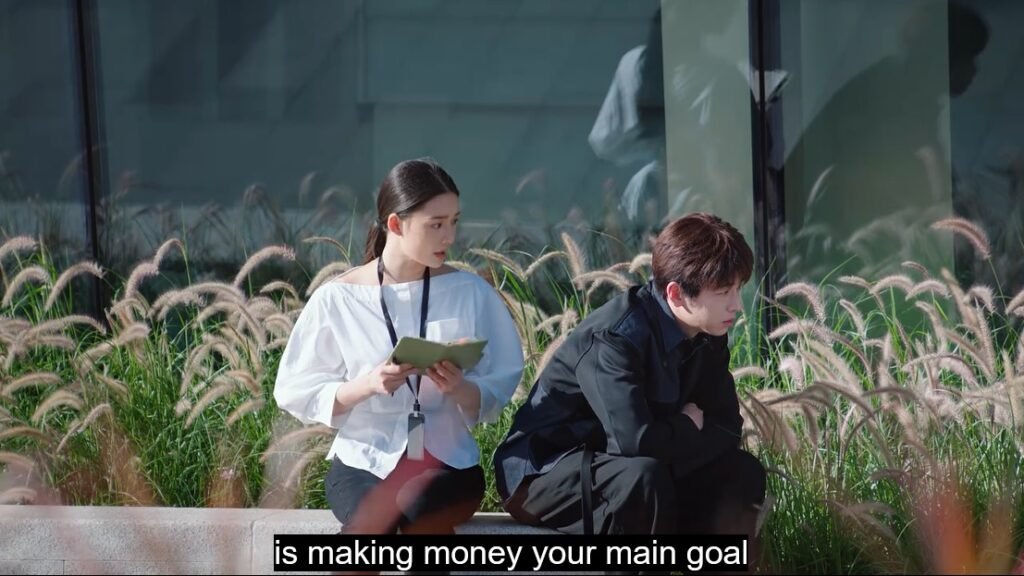
Lin Wan interviewed her prospective boss before working there. It was cute, it was the other way around.
Pei Qian’s scheme
Xin Hailu told Pei Qian that Lin Wan was a rich girl. She insisted on working at Tengda, even for free. Qian thought that a rich girl meant she was stubborn. She was an intern at Sky Fire, which meant she was inexperienced. Stubborn + Inexperienced = talent in losing money.
Deserted Island Sharpshooter (Ep 4 & 5)
Pei Qian requested the third game, Deserted Island Sharpshooter, to be launched on the same day as Sky Fire’s Bullet Mark—all while strictly forbidding overtime. He declared that it was not about quality but timing. Due to the limited time to develop the game, it was full of bugs that left players stuck. On the day of the launch, Deserted Island Sharpshooter went head-to-head with Bullet Mark. A critical bug appeared in Deserted Island Sharpshooter; the game lagged uncontrollably whenever a player attempted to fire. Players were angry, and Deserted Island Sharpshooter‘s reputation plummeted with harsh criticism.
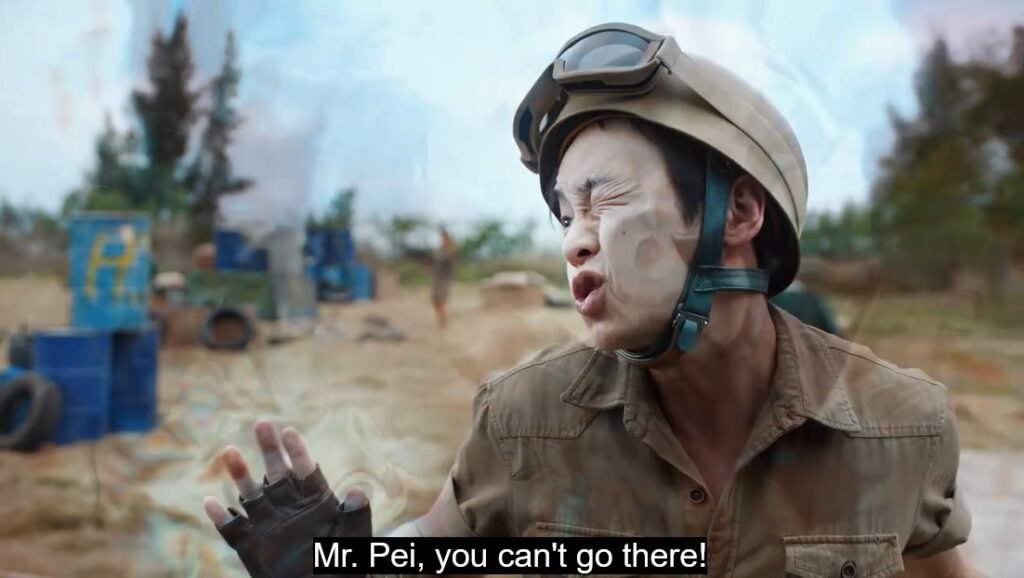
Pei Qian got stuck in the game full of bugs
Pei Qian announced his full responsibility for the fault, treated the dejected team to a lavish meal, and insisted that everyone receive their full bonuses and take the afternoon off. Moved by their CEO’s big heart, Huang Sibo, Bao Xu, Lv Mingliang, and Lin Wan decided to fix the game in secret at her house during off-work hours. Huang Sibo suggested a radical idea. Instead of fixing the lag, they added a unique battle system using mini-games. Now, whenever the game lagged during a shootout, players could win the game by completing a mini-game.
The bizarre addition had become a viral sensation, and Deserted Island Sharpshooter’s reputation soared high, passing Bullet Mark.
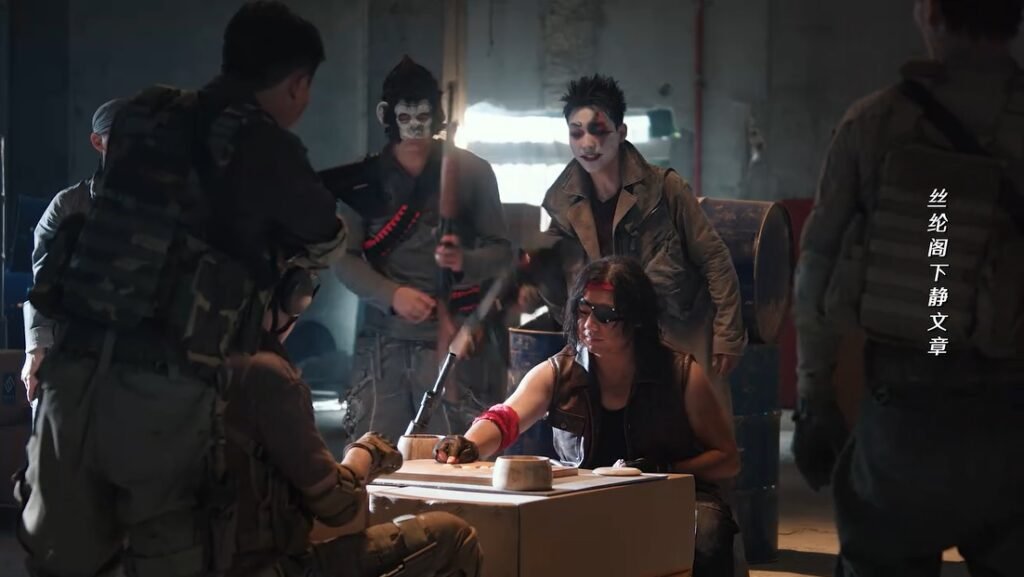
Bao Xu played Gomoku mini-game during Deserted Island Sharpshooter game lag.
Pei Qian’s scheme
Pei Qian secretly hired an outside programmer to sabotage the game with bugs, which caused the lag.
M&Y Internet Cafe (Ep 5 to 7)
Pei Qian assigned Ma Yang to take charge of establishing an internet cafe in Jinchuan University City, to communicate with gamers, and get feedback on games. This was a step toward corporatization. Ma Yang hired Zhang Yuan, a jack-of-all-trades, to manage the place. The internet cafe is called “Moyu” (which means “fish catching”) or “M&Y”.
Chen Lei was a homeless man who sat in front of the warehouse, which had now become the M&Y internet cafe. Hearing singers whom Ma Yang invited to sing at the cafe was bad, so Chen Lei tried to sing. His voice was very good; he was talented. The actor, Zao An, was a rap singer. The more Chen Lei sang at the cafe, the more confident he was. And, the more visitors came to M&Y just to hear him sing.

Pei Qian was shocked to see that M&Y was lively and bustling because of Chen Lei
After Pei Qian heard about Chen Lei, he encouraged the singer to participate in the “Dream Voice” talent show and would fund Chen Lei to do that. If Chen Lei failed, Tengda would always have a place for him to work. Chen Lei went to participate in “Dream Voice” and won first place! He thanked M&Y as his first place to start and gave him hope.
With Chen Lei left, M&Y Cafe was back in the negative. Li Shi, from Li Shi Capital, the son of Li Fuhui, the chairman of Fuhui Group, wanted to buy the struggling business. Pei Qian refused, and Li Shi wanted to use force to make Ma Yang sell the cafe, because he paid the landlord at three times the rent and paid the penalty to evict M&Y.
A rescue came from the most unlikely source. Lin Zhengnan and Shen Hua, the power couple and the founders of the Shenhua Group, turned the tables. The warehouse actually belonged to Shenhua Group. After sending Li Shi away, who also knew them, Lin Zhengnan and Shen Hua granted Tengda the right to use the warehouse indefinitely for free! It turned out they were Lin Wan’s parents and had heard from their daughter about Tengda and Pei Qian’s positive attitude toward his employees.
As a side note, the building where Tengda’s headquarters was also belonged to Shenhua Group.
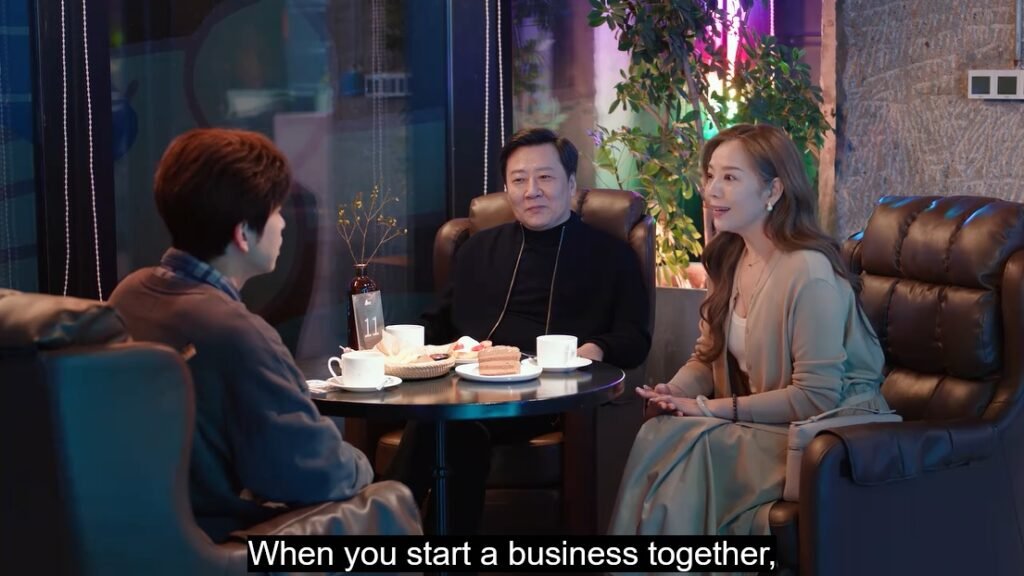
Why do I have a feeling that Lin Zhengnan and Shen Hua would like to have a son-in-law like Pei Qian?
Pei Qian’s scheme
After Pei Qian complained to Mr. Sima about how miserable he was because all the games Tengda made generated profit, thus he didn’t get money, Mr. Sima suggested Pei Qian find another industry. This was how the idea of an internet cafe came. Pei Qian knew Ma Yang couldn’t even tend his family’s food stall last time. He chose a site in a remote area, prohibited Ma Yang from doing promotion, and charged the food and beverage prices excessively.
Pei Qian was horrified when the M&Y Cafe became popular because of Chen Lei, so he wanted to get rid of the main attraction by sending him to the talent show.
Even when Lishi offered to buy the struggling M&Y, Pei Qian refused.
Tengda Best Employee Award (Ep 6)
Pei Qian organized the first Tengda Best Employee Award based on anonymous voting. Huang Sibo won first place, and Bao Xu the second place. Sibo was awarded a Dream Fund for ¥ 1 M to start a new project of his choice. Bao Xu was rewarded one month of paid leave for a VIP travel package to see the world for new inspirations. While Sibo and Bao Xu were away, Pei Qian appointed Lv Mingliang to be the Project Manager.

Poor Bao Xu was sent to a Himalayan trek where there was no internet signal
Pei Qian’s scheme
Pei Qian wanted to get rid of Tengda’s top performers because they were responsible for generating the company’s profit. Automatically, the anonymous voters chose these top performers. Huang Sibo would be busy thinking about new projects instead of meddling with company projects, and Bao Xu, who lived a sedentary life, was physically ousted. As for Lv Mingliang, Pei Qian knew that the slacker hated responsibility or having to lead anything.
Private Kitchen at Mingyun Villa (Ep 7 & 8, 10 & 11)
This high-end restaurant didn’t have a name; it was just called a private kitchen. It was located in a remote, signal-free location at Mingyun Villa. People had to hike there, harvest their own vegetables, and catch their own fish for their meal. Everything requires a reservation. Customers must pre-order seeds for vegetables to grow at the farm or fish at the pond to ensure a fresh harvest. Chef Lin, from M&Y Cafe, was appointed as the Restaurant Manager.
Pei Qian argued that the wealthy enjoyed seeking hardship (by hiking, harvesting, and catching fish) to find the meaning of life and enlightenment. This private restaurant sold craftsmanship along with food and beverages.

Mingyun Villa
The restaurant’s unexpected popularity came from celebrity actor Lu Zhiyao, who posted photos of himself dining at the private restaurant. Lu Zhiyao was hired by Tengda/Zhongdian Web Fiction last time to promote the site but didn’t have any effect on his fans. However, when the celebrity posted these photos, the private restaurant became a trending topic, remaining on the hot search list for several days. Many people flocked to the private restaurant, overwhelming Chef Lin and his staff.
Lu Zhiyao continued to bring visitors to the quaint restaurant when a production team chose the place as the filming location for a variety show called “Beautiful Villa,” starring Lu Zhiyao.
Li Shi had also invested in the area for a cultural travel project.
Pei Qian’s scheme
Pei Qian purposely bought this remote villa and opened the upscale private restaurant to incur more losses. He got money from the monthly loss, and he used as a down payment to buy his parents a new apartment.
Li Shi, the investor who failed to buy M&Y Cafe last time, was interested in buying the private restaurant in Mingyun Villa, but Pei Qian refused.
DreamForge Capital (Ep 8 & 9, 13)
Pei Qian established DreamForge Capital or Yuanmeng Investment, and put Ma Yang in charge. Zhang Yuan was now in charge of the internet cafe M&Y. The goal is not to make money, but to fulfill dreams by investing in people other investors would ignore.
Through DreamForge, they found an inventor named Zhang Wang, who proposed converting abandoned public telephone booths into vending machines. Although at ¥20 for 10 minutes of access, the price was quite steep.
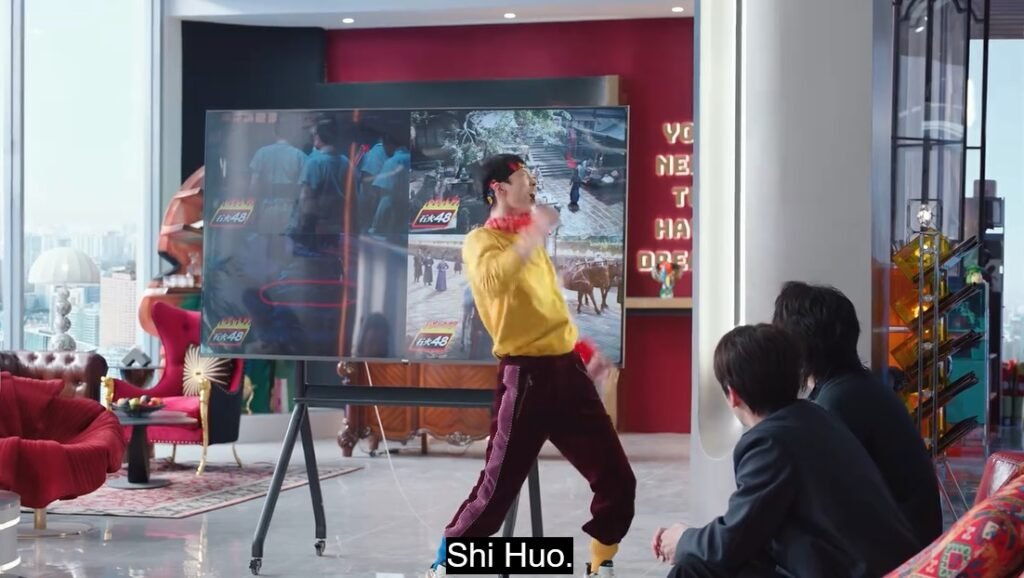
There was also a persistent bit actor named Shi Huo. He desperately wanted to be an actor after playing bit parts for five years.
Pei Qian’s scheme
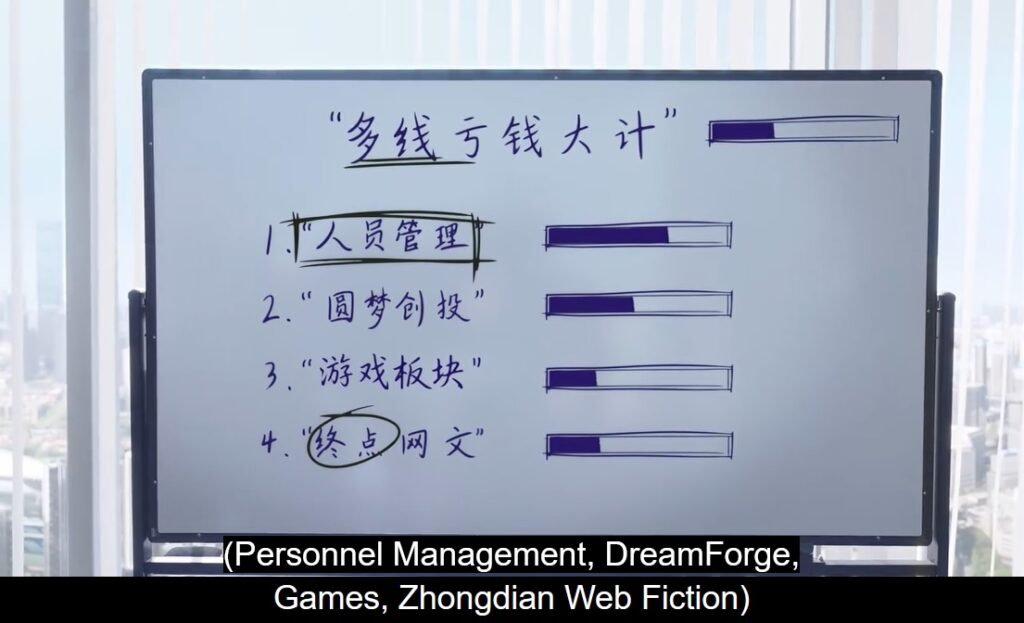
This scheme is a part of Pei Qian’s Multi Front Loss Strategy (see the image below). While interviewing and screening the future entrepreneurs, Pei Qian specifically avoided the ones whose investment cost was too low, or he deemed profitable.
Pei Qian also let Ma Yang recruit a group of juniors from their college who were struggling to find jobs, acting on a request from their former counselor. Pei Qian was then secretly assigned Tang Yishu from their school for a special management trainee program. Tang Yishu was to intern across various departments. Despite her tendency to cause bad luck, she managed to encourage some employees, especially the struggling writers from Zhongdian Web Fiction, to think outside the box for their struggling work.
Pei Qian’s scheme
Knowing that at school Tang Yishu was known as legendary for her bad luck, the ‘special’ assignment was to sabotage the employee, either physically (damaging the equipment) or mentally (discouraging employees or interrupting their work).
Zhongdian Web Fiction (Ep 8 to 10, 15)
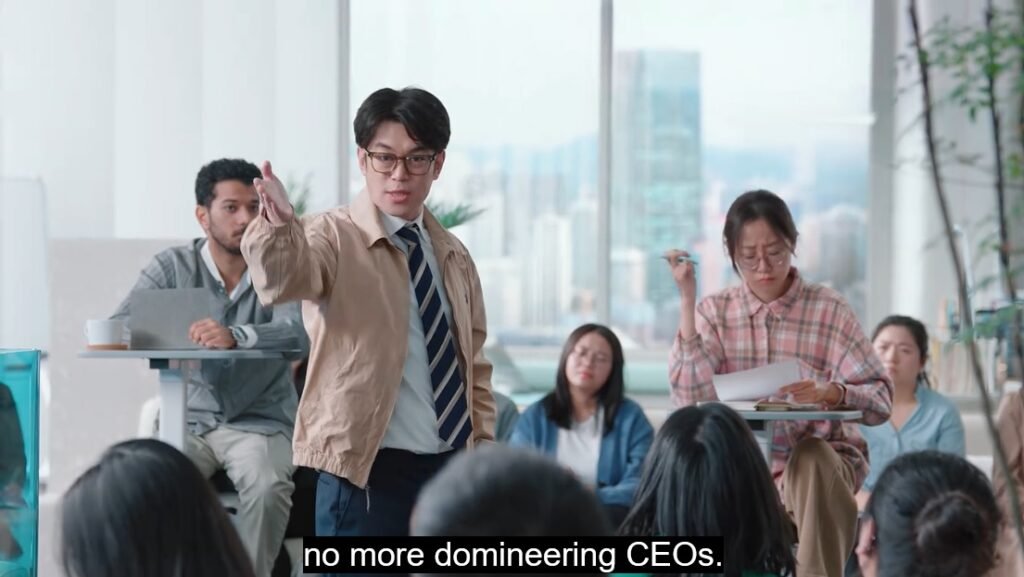
When Pei Qian saw that the office next door to Tengda went bankrupt, he rented the space for Huang Sibo to launch Zhongdian Web Fiction. The new web novel platform is designed for writers to write novels with anti-trope rules. For example, no domineering CEO as the male lead for the romance genre.
Pei Qian ordered Huang Sibo to find a highly popular celebrity to promote Zhongdian Web Fiction. Following this directive, Huang Sibo secured a high-paying endorsement deal with popular celebrity Lu Zhiyao.
Pei Qian’s scheme
Another part of Pei Qian’s Multi-Front Loss Strategy. Pei Qian hired authors who received base salaries, insurance, and a housing fund. They were strictly limited in productivity, similar to no overtime at Tengda. If an author writes more than a thousand words, they are forced to rest. If they write fewer than 500 words, they are rewarded for carefully polishing their work.
Because of Pei Qian’s demand for implementing counter-trend philosophy, the site had a lack of traffic. Lin Wan suggested Huang Sibo write a novel based on their newly released game Returning to Shore. It was trending in first place. The second place came from an external source, but it didn’t use Pei Qian’s unconventional model. The novel title was “The CEO Has an Exclusive Crush on You.”
Returning to Shore (Episode 8 & 9, 12)
Returning to Shore was Tengda’s fourth game, helmed by Lin Wan and Lv Mingliang. This is a “soulslike” game, see the definition of this genre below:
“Soulslike” refers to a genre of challenging action RPGs, characterized by precise, stamina-based melee combat, high-stakes boss battles, and punishing death mechanics. Key elements include exploring interconnected worlds, managing resources at checkpoints, and recovering lost currency upon death.
The features, as Pei Qian demanded, were as follows:
- A game mechanic that integrates Chinese classical poetry into combat. To unleash an ultimate attack, players had to vocally recite an ancient poem, including its dynasty and author.
- The difficulty up to Hell Mode, aiming to eliminate 99. 9999% of players.
- An interactive mocking system that ruthlessly insults players upon failure.
- The longest possible refund period—complete with built-in reminders so players won’t forget to get their money back.
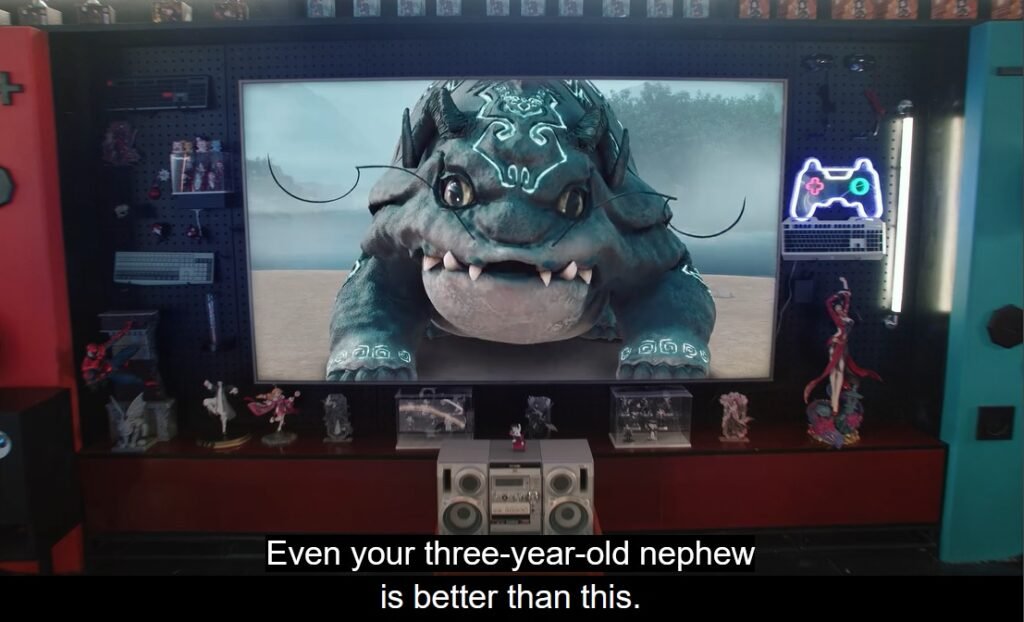
The mocking system in Returning to Shore
When the game was launched, news reported widespread criticism due to its forced poem recitation and merciless taunting system.
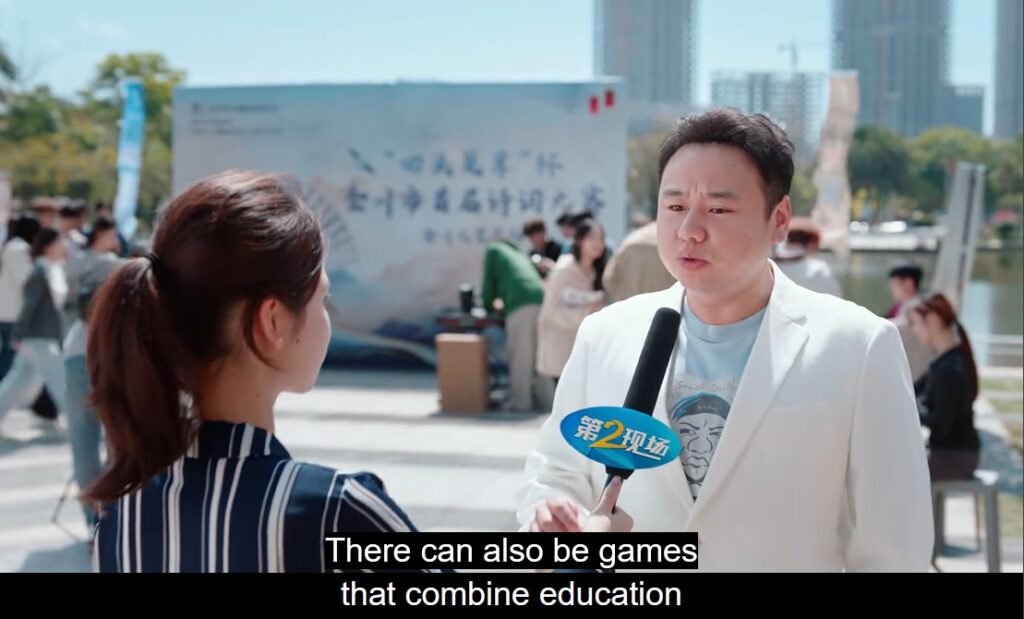
To promote the game, Lin Wan organized a public event, “Returning to Shore Cup Poetry Contest.” Prizes included lifetime membership cards to Tengda’s Sloth Gym. The contest became widely popular, and Bao Xu became the company spokesperson and conducted TV interviews. He stated Tengda’s commitment to creating educational and meaningful games. There were also the “Poetry Contest Mini Program”, an online “Top Ranking Contest,” and other activities to engage a broader audience beyond gamers. People had contacted Tengda nonstop, asking for authorization to organize poetry contests. The game had ignited a national craze for learning classical poetry, positively influencing public opinion.
At the end of Ep 12, there was an Easter Egg on decoding internet memes using Chinese classical poetry. Don’t miss out!
Pei Qian’s scheme
This project was actually Pei Qian’s attempt to block or even diminish Lin Wan’s creativity and productivity. After meeting her parents, he knew she was an idealist and an ambitious person. Since Episode 7, he tasked Lin Wan to summarize every failed game from the past 10 years, then 20, 30, finally 100 years, lol! He gave her unlimited overtime in hopes of exhausting her. However, Lin Wan didn’t get discouraged but was more motivated, thinking that Pei Qian wanted her to step out of her comfort zone and work even harder. She kept finishing her task and coming back with her result until there was no more period to research, lol! To discourage her, he wanted her to make a game from a genre she liked the least, the “soulslike game”. To add difficulty, Pei Qian insisted on a mechanic that integrates Chinese classical poetry into combat, believing it would make the game too difficult for the mass market.
Matchmaking Event (Episode 9, 13)
Pei Qian organized a one-day matchmaking event for the staff of Tengda and Zhongdian. Huang Sibo met his match, Hu Yue. As they share a meal, they realize they are each other’s secret readers: Hu Yue is “Niu Yanben” and Huang Sibo is “Ma Dubiao.” Sibo wrote a novel himself using Pei Qian’s counter-trend philosophy under the pseudonym “Ma Dubiao.” One dedicated reader was using the name “Niu Yanben.”
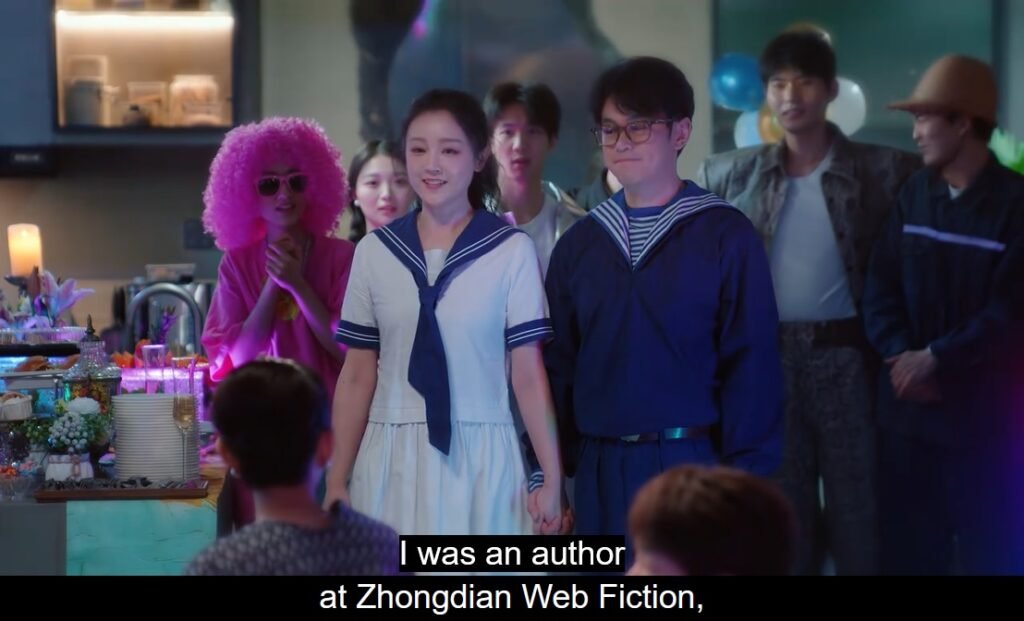
The first office romance: Huang Sibo and Hu Yue. The couple’s outfit was so cute, during the office party/apartment-warming at Four Wall Apartments.
Shared Phone Booth (Episode 9 to 11)
The Shared Phone Booth became popular because of one person. One late night, during a downpour, a working girl was unable to find a taxi home. She sought refuge in a phone booth. That night was her birthday, but she was tired and alone. Coincidentally, the phone booth also provided towels, a hair dryer, music, snacks, and even cakes. She had a quiet but pleasant birthday while talking to her mother on the phone. She shared her experience in social media, and the phone booth went viral. Even became a tourist attraction. The phone booth became a sanctuary among many office workers, where they could make phone calls, gossip, and complain about their bosses.
Ruan Guangjian was commissioned by Lin Yan to draw the original artwork for Returning to Shore, now included the integrate these various industries to cross-promote and drive traffic to one another.
Pei Qian’s scheme
Pei Qian thought that the phone booth vending machine was expensive and outdated, so it was doomed to fail. Initially, the price of ¥ 20 with only 10 minutes of access was deemed outrageous by passersby.
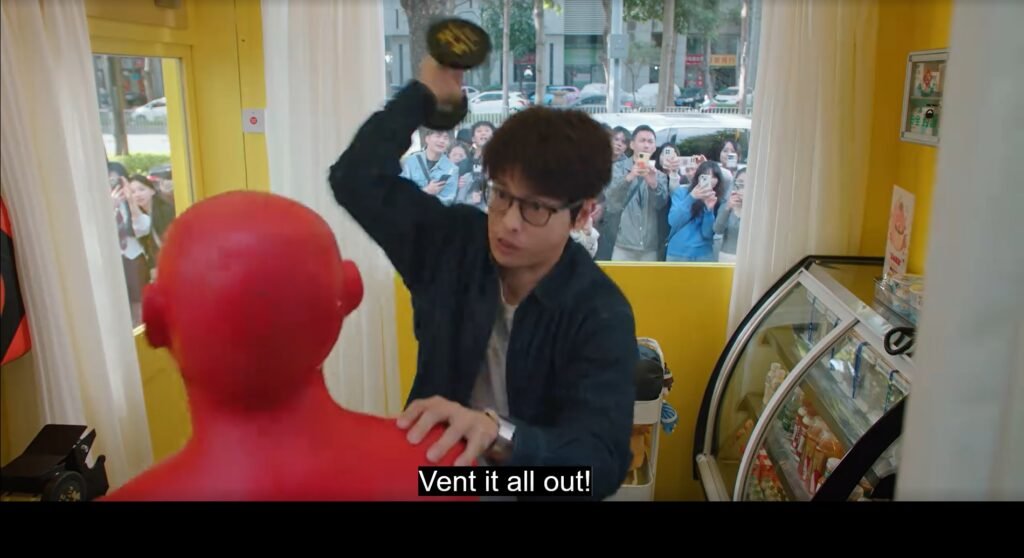
Pei Qian was very angry when he found out the phone booth had accidentally become popular. He vented out by hitting the mannequin.
Conclusion
Wow, there were so many new ventures opened by Tengda, not only games! Yes, the drama plot is tight with a lot of stuff. Will there be more new subsidiaries added to Tengda Group in the second part? You bet! Continue to No Pain No Gain: The Company’s Success and the CEO’s Scheme (Part 2).