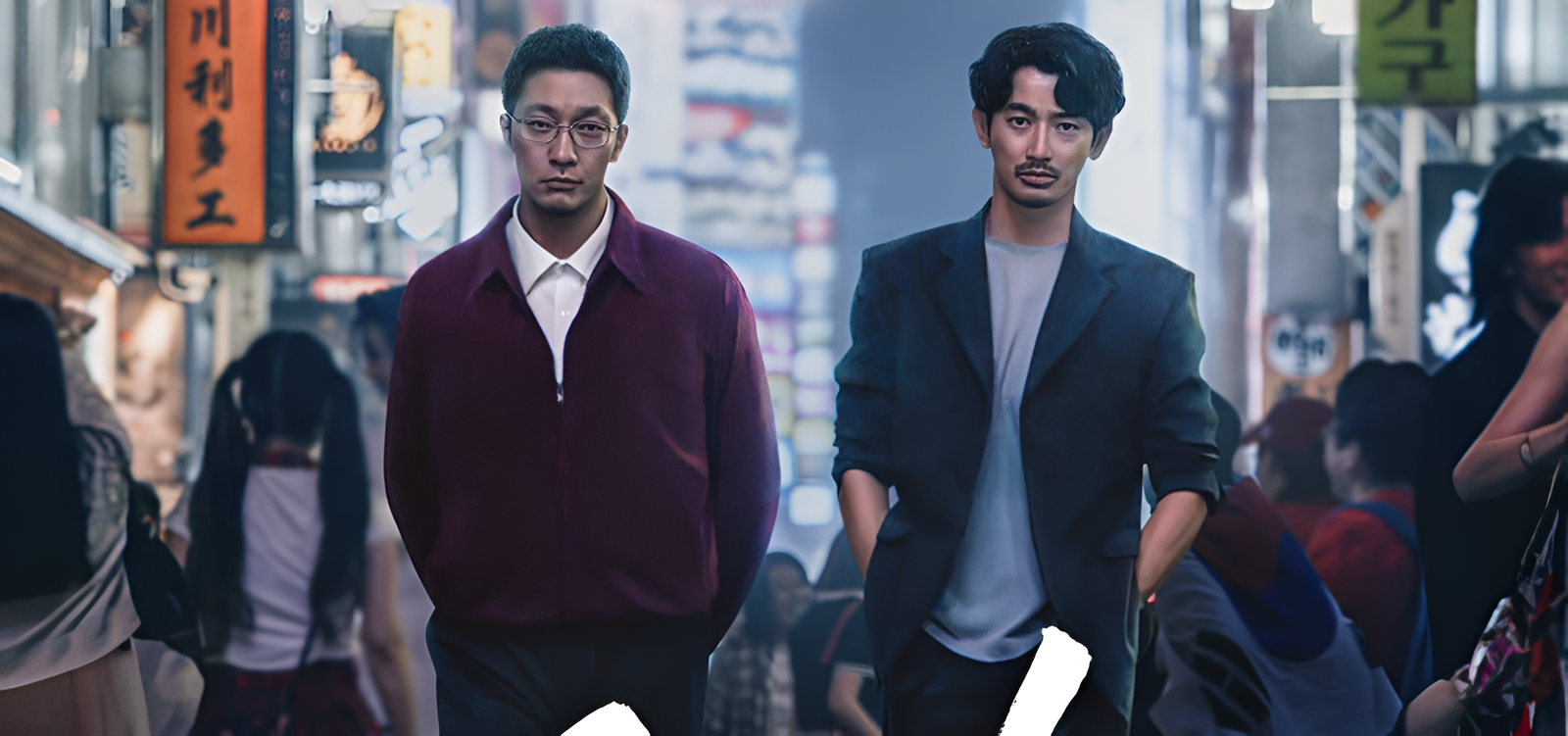
Introduction
A series of bizarre murders brings together two detectives from different countries, each with their own personality, methods, and baggage. In The Blue Road, a Seoul Metropolitan Police detective and a Tokyo Metropolitan Police detective join forces in a Korean-Japanese crime thriller that takes viewers through a maze of mysterious deaths, hidden identities, historical secrets, and long-buried grudges. What begins as a seemingly straightforward murder investigation gradually opens the door to a much bigger story, where the past refuses to stay buried and nothing is quite as simple as it first appears. As the investigation unfolds, the detectives find themselves caught up in a web of secrets that stretches far beyond the original crime. So, where does this winding road ultimately lead?
The meaning of “Blue Road” is explained—in a spoiler—at the end of the drama.
Drama Info
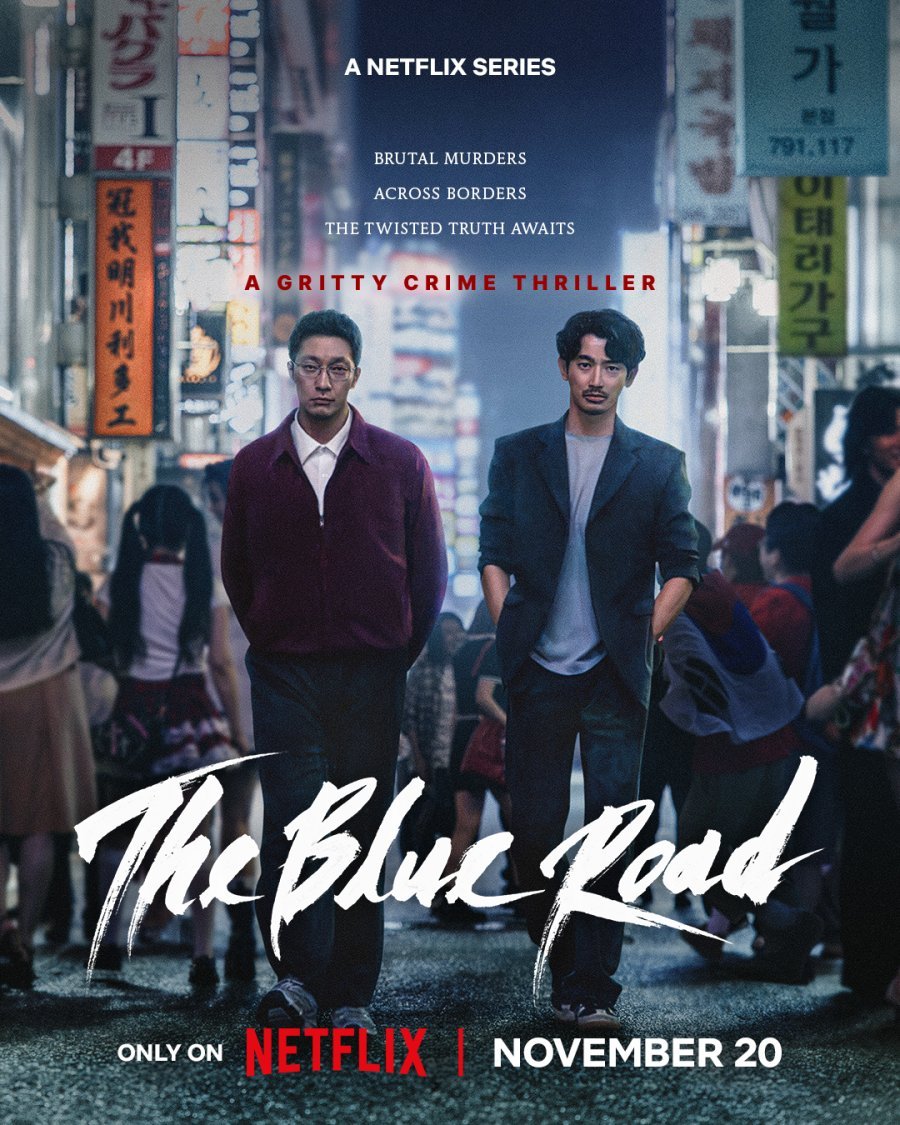
Drama title: The Blue Road (Native title: 푸른길)
Alternative title: Pureungil
Genres: Thriller, Mystery, Crime, Drama
Aired: 20 Nov, 2026
Episodes: 8 | Duration: 45 min.
Director: Han Jun Hee (한준희)
Screenwriter: Han Jun Hee (한준희) and Cho Yu Jin (조유진)
Adapted from the comic “Blue Road” (푸른길) by Keisi Edogawa and Kwon Ga Ya (에도가와 케이시, 권가야). No English translation at this time.
Where to watch: Netflix
Trailer
Synopsis
In Tokyo, a gruesome murder is discovered, its victim’s body grotesquely contorted and displayed like a work of art. At the scene, Detective Inose encounters Kim Seok, a South Korean detective dispatched to Japan for a joint investigation. As similarly disturbing murders and cryptic messages emerge across South Korea and Japan, the two detectives reluctantly team up to uncover the truth behind the chilling pattern. (Source: MyDramaList)
Characters
Main Characters
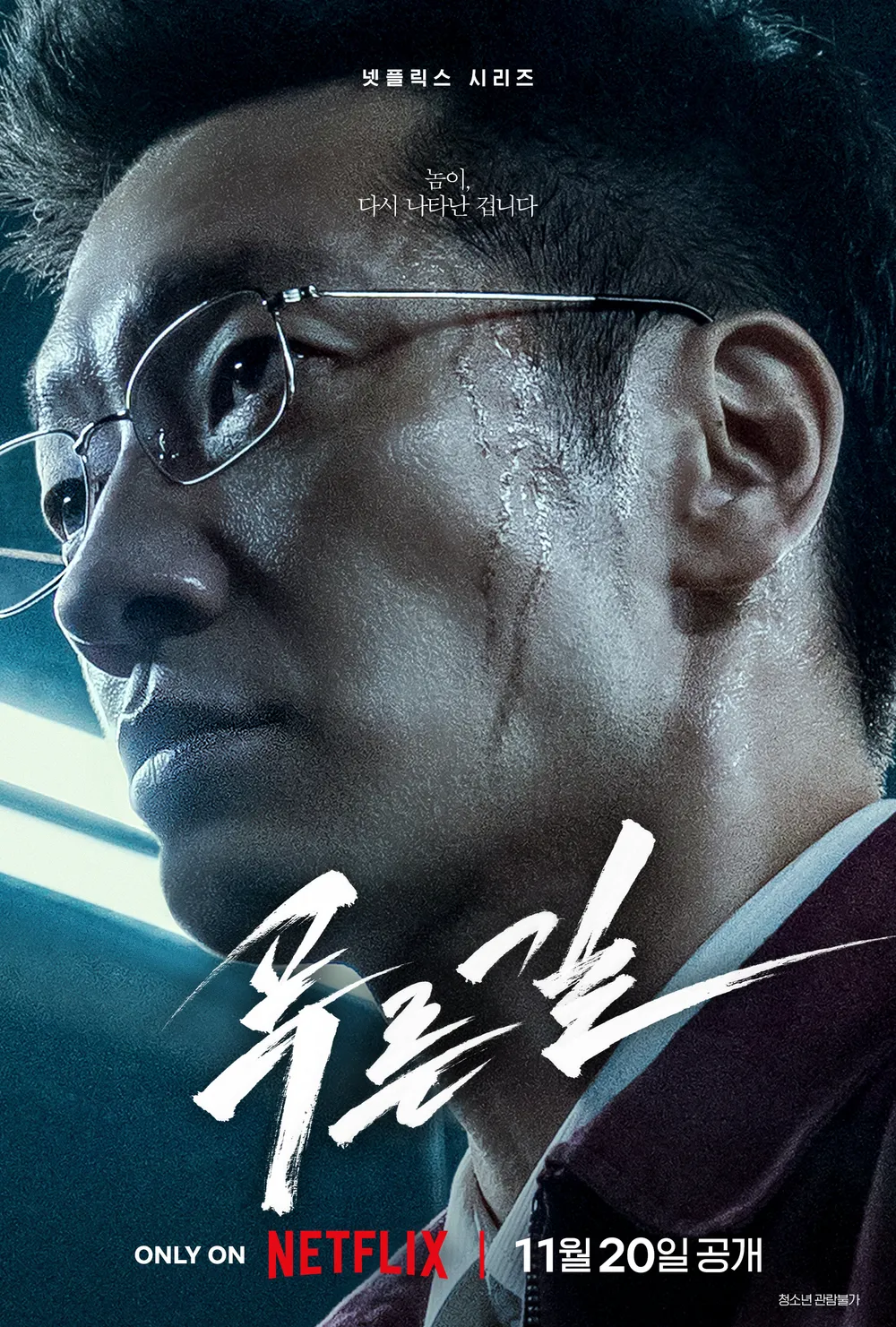
Son Suk Ku (손석구) as Kim Seok
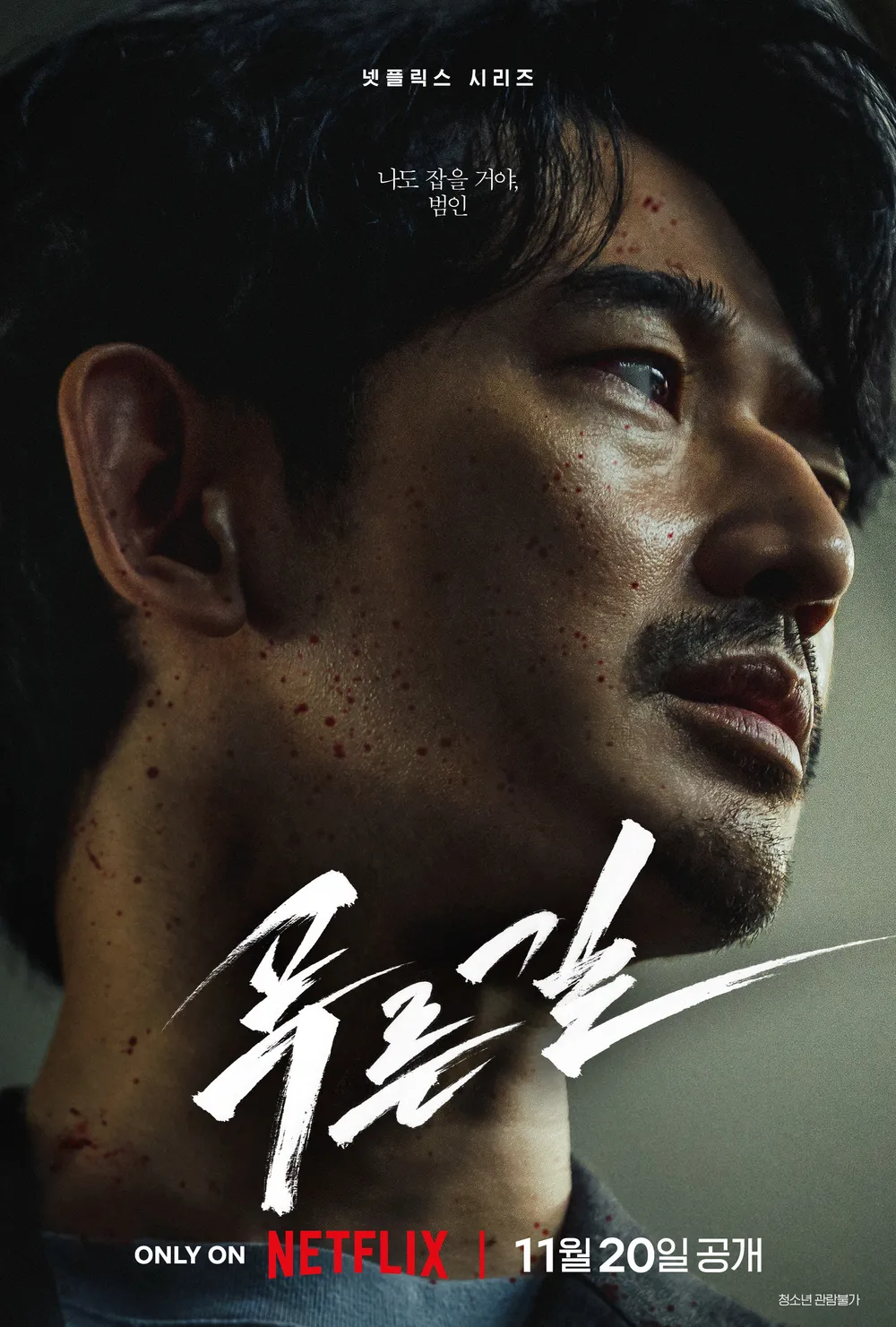
Nagayama Eita (永山瑛太) as Inose Hiroshi
Supporting Characters
Although there are many supporting characters, both Korean and Japanese actors, there are almost no supporting-character posters. Here is a group photo from the promo event:
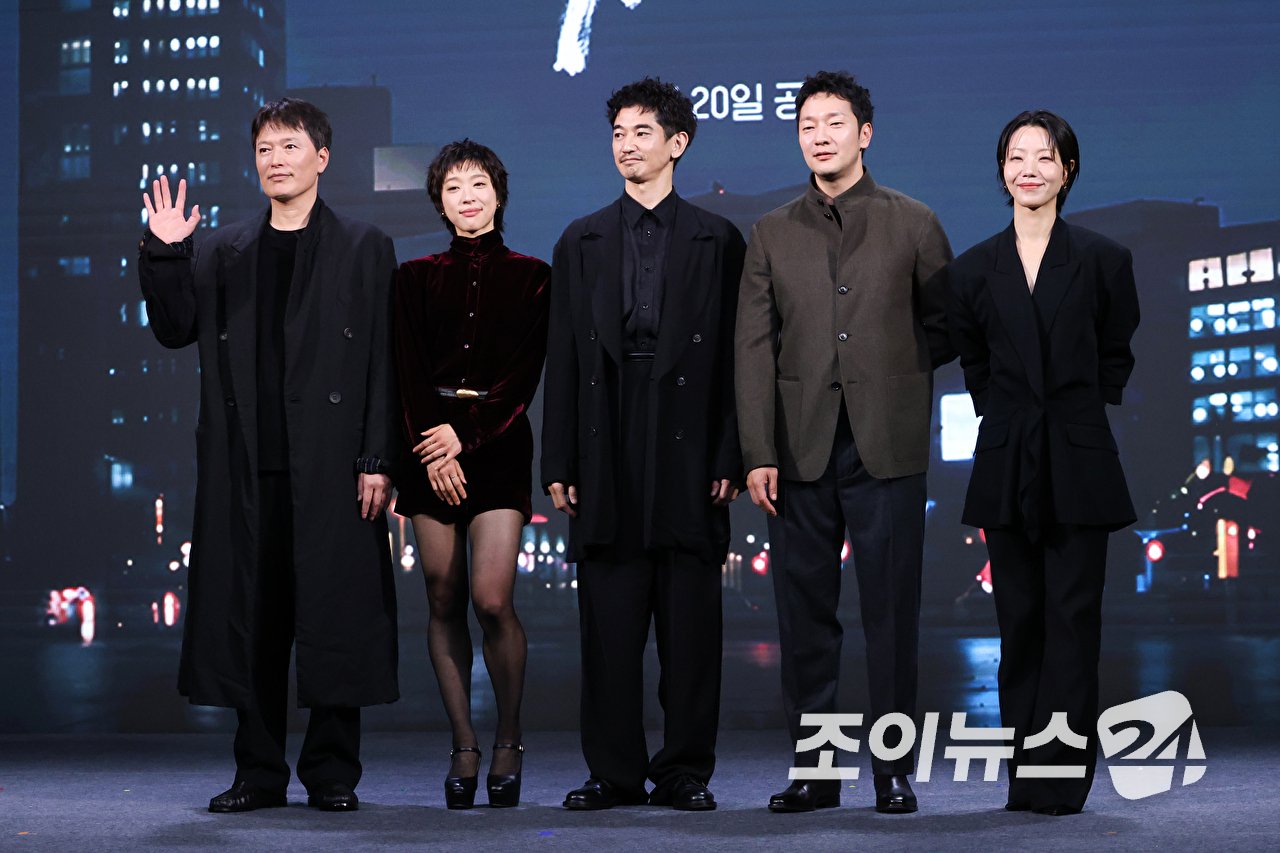
credit: Joynews24
The supporting actors, together with Son Suk Ku and Nagayama Eita:
Far left: Jung Jae Young as Seo Hyeon Tae: Japanese pachinko tycoon
Second from left: Choi Sung Eun as Yun Su Gyeong – National Intelligence Service (NIS) agent.
Far right: Kim Shin Rock as Ri Yun Ok – Zainichi Korean businesswoman.
Also: Sakaguchi Kentaro as pianist Emi Shunsuke

Facts vs Fiction
What Is Fictional
- The serial murders and the investigation are the plot from the comic
- The secret organizations and their Conspiracies: While the show references real-world entities like South Korea’s former Agency for National Security Planning (ANSP), the covert torture unit (“Gráfica”) and the specific 1987 cover-up conspiracy at the heart of the mystery are fictionalized plot devices.
What Is Historically Grounded
- The 2002 FIFA World Cup backdrop
- Korea–Japan Historical Tensions: the series authentically portrays deep-seated animosity, generational trauma, and casual anti-Korean prejudice in Japan stemming from centuries of conflict—ranging from the 16th-century Imjin War to 20th-century Japanese colonial rule.
- Zainichi and the underworld dynamics: The depiction of Korean-Japanese (Zainichi) communities, pachinko parlor empires, and cross-border crime syndicates reflects real postwar socio-economic realities in Japan.
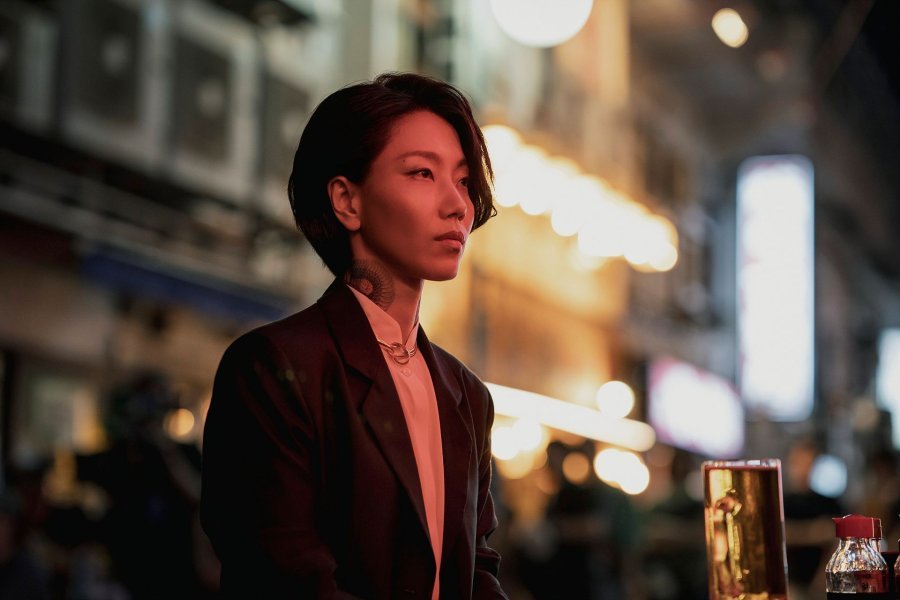
Ri Yun Ok, the Zainichi Korean businesswoman, rose to dominate Japan’s pachinko industry.
Review
What I Liked
Son Suk Ku and Nagayaman Eita’s chemistry
Probably the drama’s biggest highlight! Their contrasting personalities make an entertaining detective duo, and their interactions bring plenty of charm to the story.
Strong acting
Son Suk Ku delivers an intense performance, while Eita Nagayama brings his character a lot of charisma.
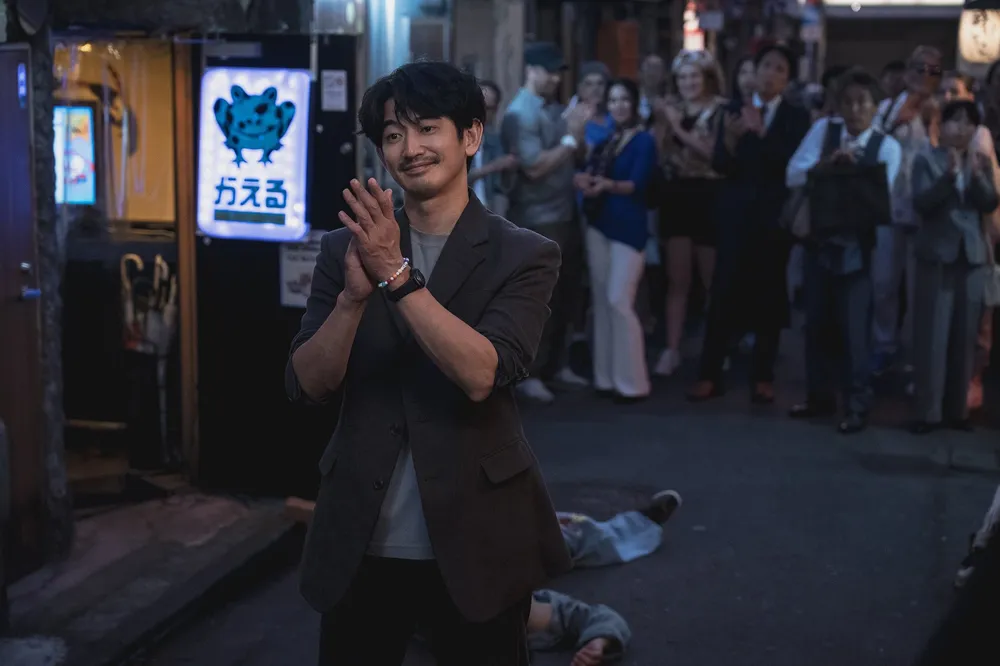
An intriguing beginning
The mysterious murders, cross-border investigation, and suspenseful atmosphere make the first few episodes particularly engaging.
Interesting Korea-Japan setting
The historical backdrop and complicated relationship between the two countries add another layer to the mystery.
What I Disliked
Too many things happen in just 8 episodes
The historical background, government involvement, personal tragedies, and revenge plot make the story feel unnecessarily complicated.
Plot holes and questionable decisions
Some character actions don’t make much sense, and certain developments feel forced just to move the story forward.
Plot holes:
- The mystery clues that go nowhere, for example: the bell sounds and ghosts; or the historical military strategy book.
- Emi Shunsuke’s storyline initially appears to be at the heart of the investigation. But as the drama progresses, his story gets pushed aside in favor of Kim Seok’s complicated family history.
- Yoon Soo Kyung is introduced as a highly capable NIS agent with excellent Japanese-language skills. Yet, when confronted with a suspect at close range, she struggles to shoot accurately.
- There are situations where the bad guys have the upper hand but waste time talking instead of finishing off their opponents.
- Seo Hyun Tae becomes increasingly important as the story develops, but some details surrounding his identity and background weren’t handled convincingly.
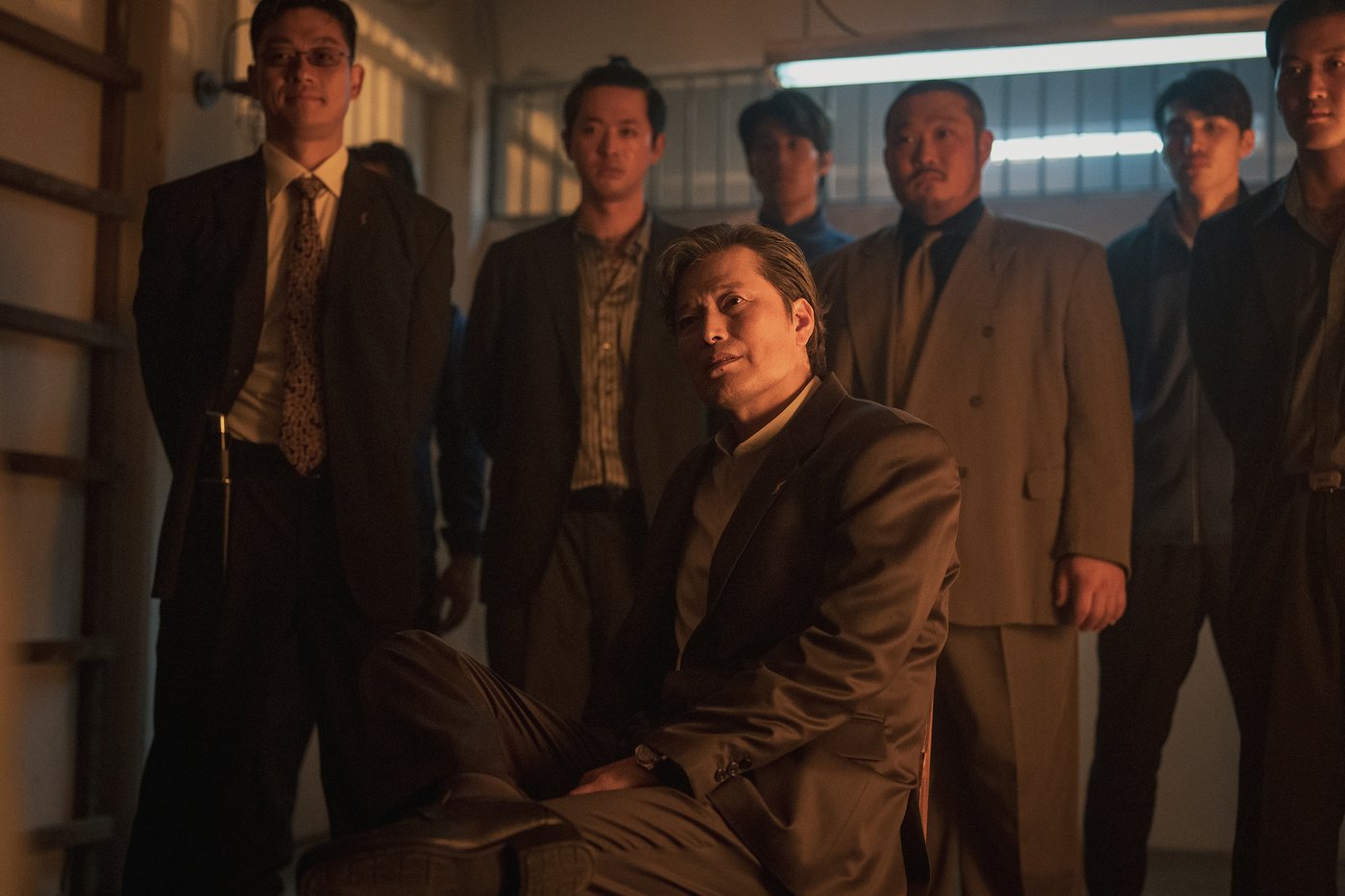
A disappointing ending (my opinion)
Without spoiling too much, I think the drama doesn’t deliver a satisfying conclusion. If you want an ending spoiler, check the end of the article.
My Rating
I used my rating system with additional scores of:
- + 1.0 for the crime plot and international collab trope
- + 1.0 for the duo detective and their acting
- + 1.0 for the production value
Total rating 9.0/10.
Conclusion
A Korean-Japanese detective partnership, a series of bizarre murders, and a mystery filled with historical secrets — The Blue Road certainly knows how to grab your attention. With Son Suk Ku and Eita Nagayama teaming up as two detectives with very different personalities, the drama gets off to an intriguing start, offering plenty of suspense, action, and even some amusing moments. The chemistry between the two leads is easily one of its biggest attractions.
Unfortunately, what begins as an exciting murder mystery gradually turns into a rather tangled story involving family secrets, historical grudges, revenge, and a whole lot of explanations. Some intriguing clues seem to go nowhere, and certain plot developments feel unnecessarily complicated.
In the end, The Blue Road takes viewers on a rather bumpy ride. There are moments worth enjoying, particularly the chemistry between the two leads, but I couldn’t help feeling that the drama had lost sight of the story it originally promised to tell. A promising journey, no doubt, but not quite the destination I was hoping for.
Spoilers
What is the meaning of “Blue Road”?
In Episode 8, when Detective Kim Seok travels to Central Asia, a local Koryo-saram woman named Anastasia explains that the “Blue Road” refers to the long, tearful path of ethnic Koreans who were forcibly uprooted from their homeland.
Who is/are the killer(s)?
1987 serial murders: The clandestine 1987 torture unit, the Gráfica Agency of National Security Planning (ANSP). This includes Seo Hyun Tae, Hong Du Yeong, and Minamoto Shoichi
Hong Du Yeong killed Kim Seok’s father
2002 serial murders: Emi Shunsuke
What is/are the motif?
1987: Seo Hyun Tae originally carried out the bone-snapping executions on undocumented detainees to make state murders look like the work of a serial killer. In 2002, he is hired to eliminate Emi Shunsuke before the past is exposed.
2002: Emi Shunsuke is a copycat serial killer who murders and stages victims across Tokyo and Seoul. As a child in 1987, he witnessed the bone-twisting torture method firsthand and later replicated it.
What is the ending? [short answer]
Bittersweet
How does it end? [long answer]
Bitter: Detective Kim Seok is killed by Seo Hyun Tae.
Sweet: Generational healing. In the 2026 epilogue, Anastasia—the Koryo-saram woman whom Kim Seok helped return to South Korea—has become a Korean police officer leading briefings on a case.