Introduction
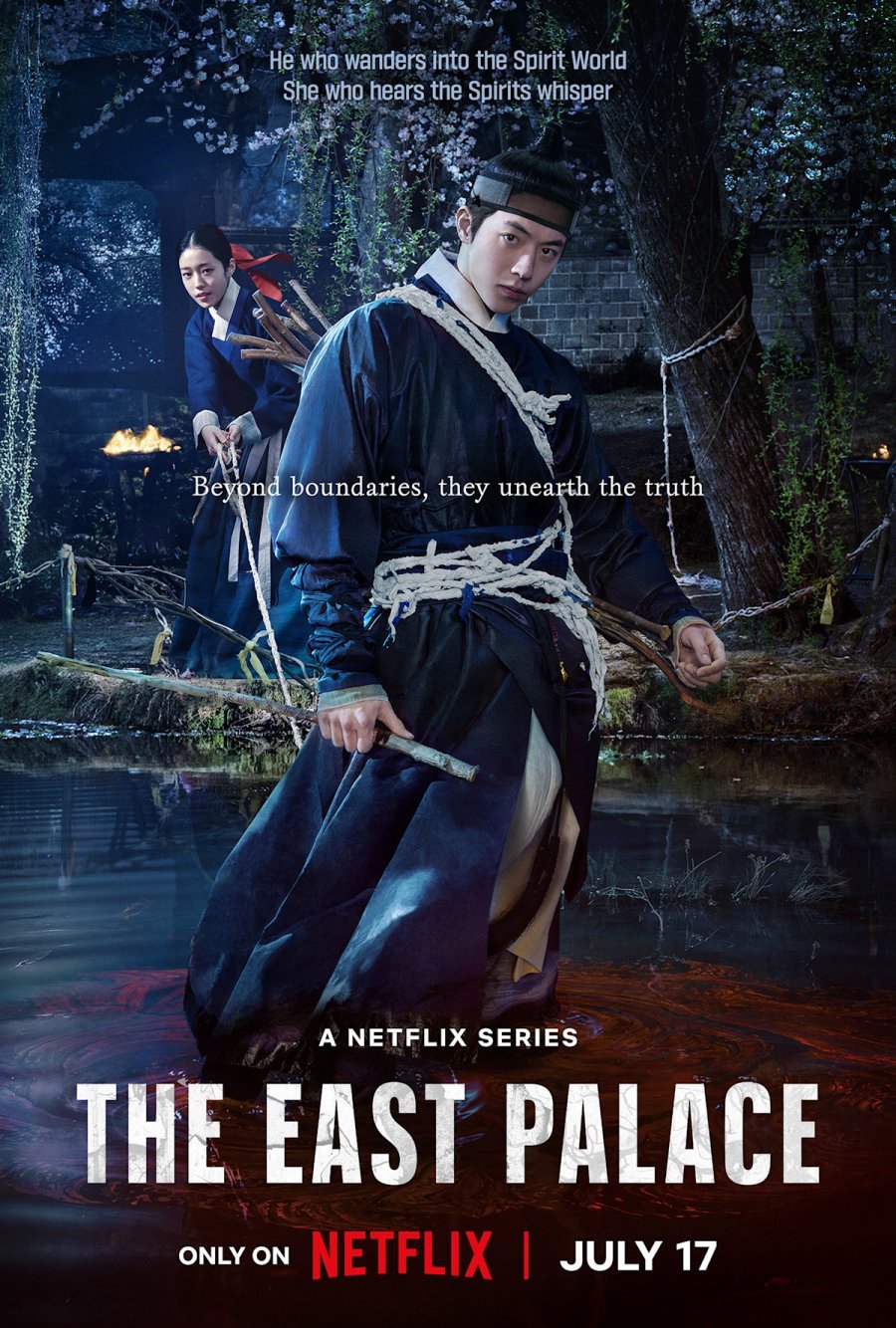
Korean dramas have increasingly embraced folklore and supernatural storytelling, but The East Palace takes a darker path by blending horror, mystery, and Korean mythology into a chilling and atmospheric experience. Set within the shadowy halls of the royal palace, the drama explores a world where restless spirits and hidden secrets collide. As unexplained supernatural events begin to unfold, the characters find themselves confronting forces that exist beyond human understanding.
In this review, I’ll take a closer look at the story, characters, performances, and the eerie visuals to determine whether The East Palace succeeds as both a supernatural thriller and a compelling historical drama.
Regarding the article title, a gwi-mae or gwi-ma is a soulless bundle of bad energy that targets people with darkness in their hearts. You will know more about gwi-mae by watching the drama.
Drama Info
Drama title: The East Palace (Native title: 동궁)
Alternative title: Donggung
Genres: Action, Historical, Horror, Fantasy
Aired: 17 Jul, 2026
Episodes: 8  |  Duration: 60 min.
Directors: Choi Jung Gyu (최정규)
Screenwriters: Seo Jae Won (서재원) and Kwon So Ra (권소라)

Where to watch: Netflix
Trailer
Synopsis
A man who walks the spirit world and a court lady who hears the dead enter the East Palace by the king’s orders — can they unravel its dark secrets? (Source: Netflix)
Main Characters
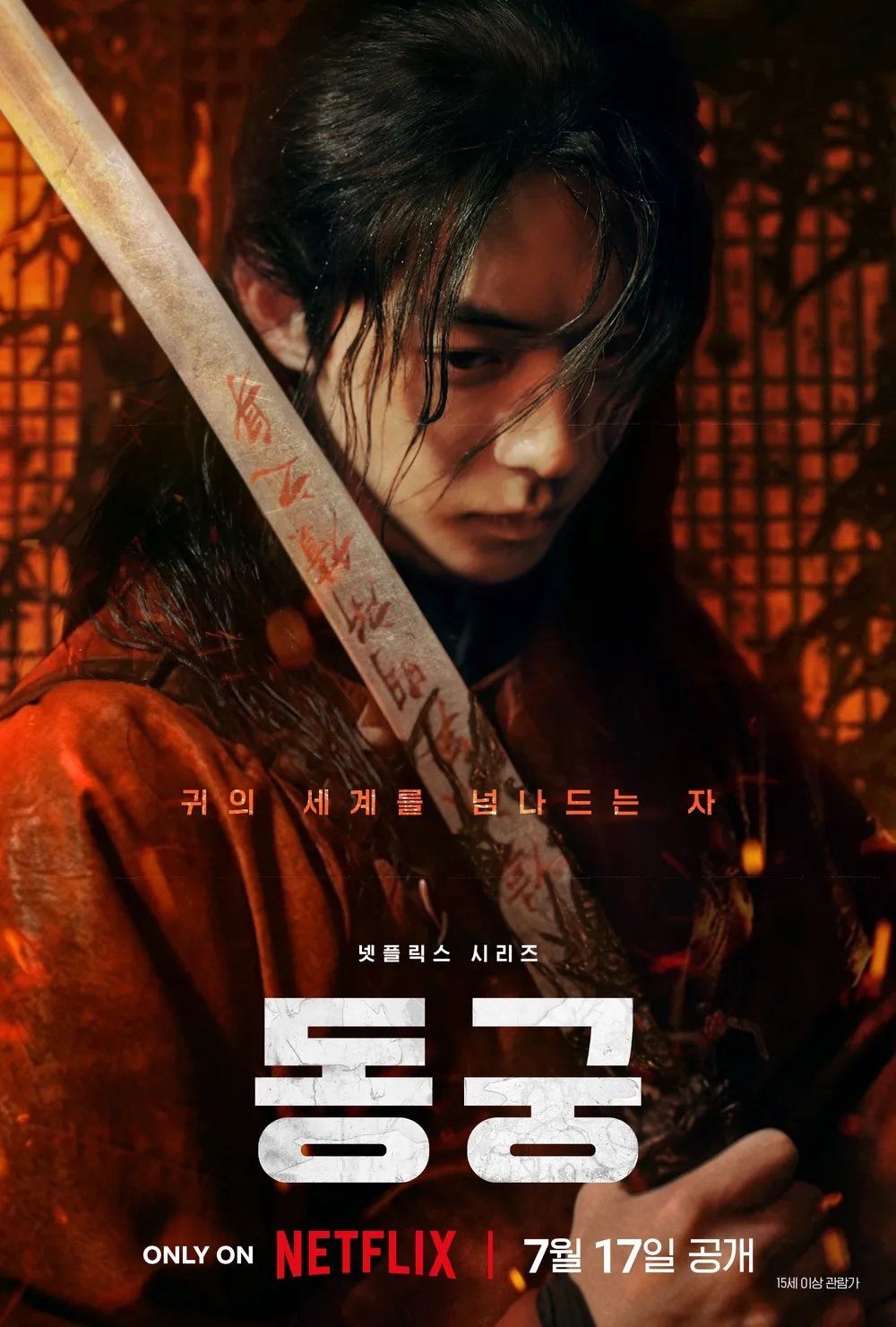
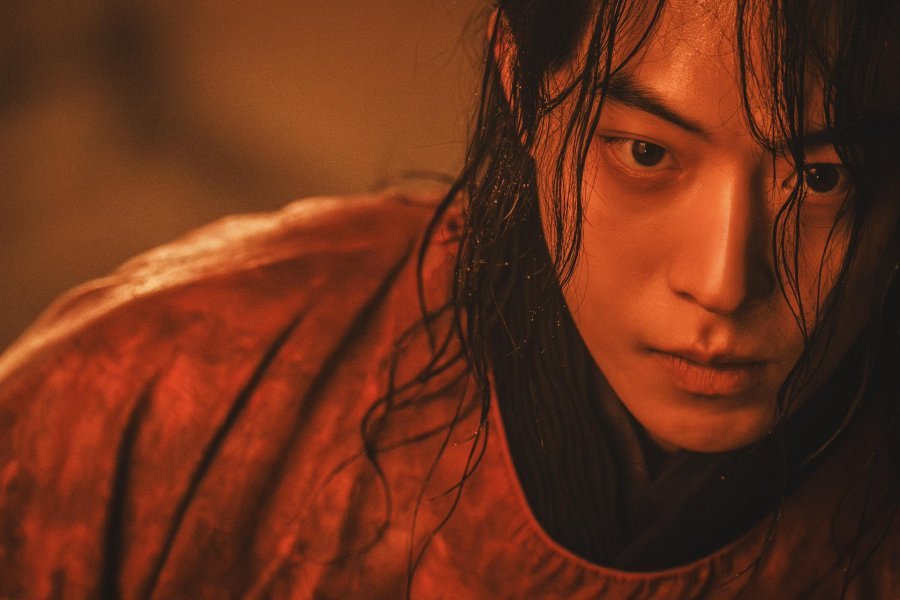
Nam Joo Hyuk (남주혁) as Gu Cheon
The man who enters the spirit world
The arrogant ghost slayer. Having experienced a tragedy in childhood, he gained a special ability to traverse the world of spirits, allowing him to become a spirit himself and slay spirits directly with a sword. Summoned to the palace by the king.
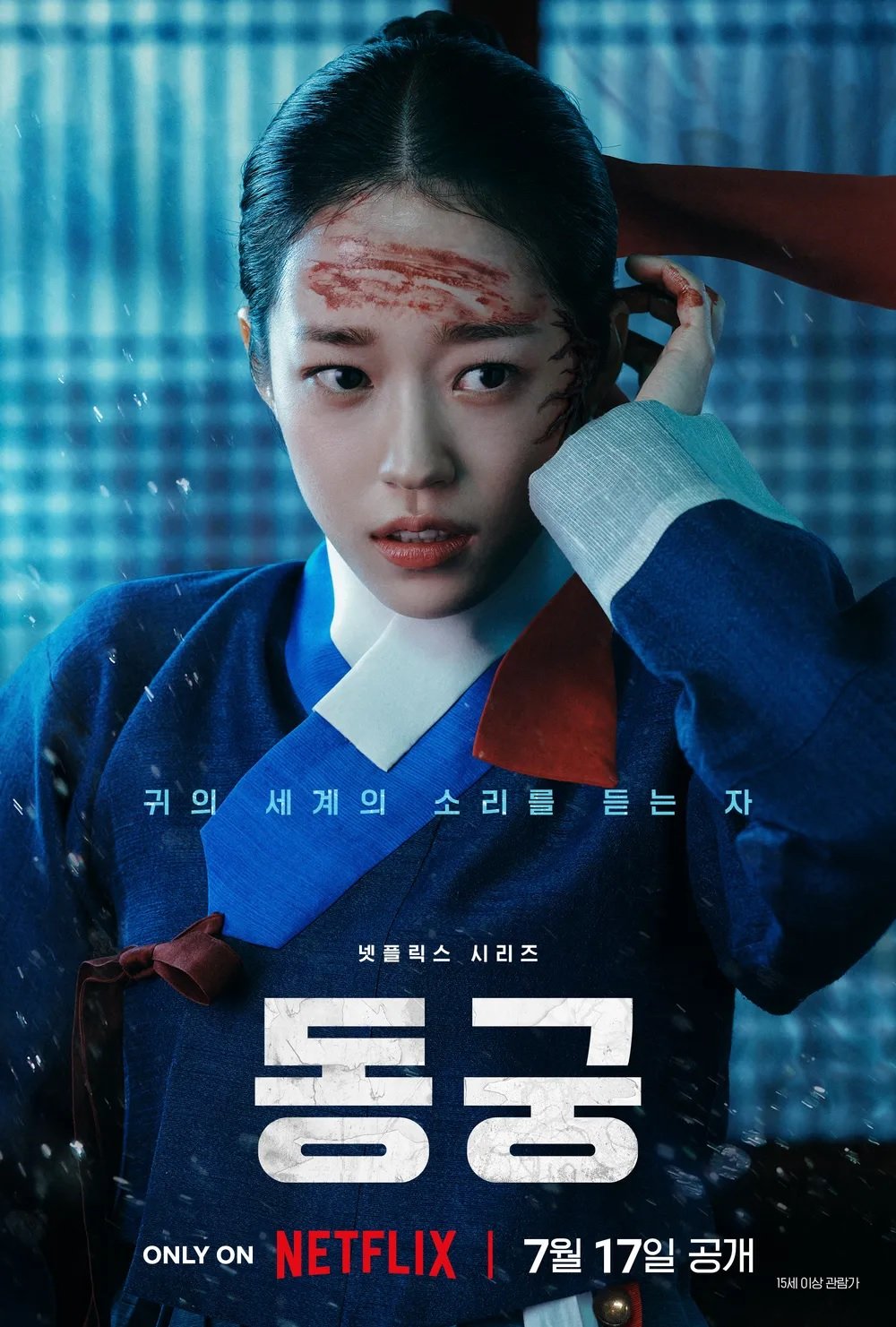
Roh Yoon Seo (노윤서) as Saeng Gang
The woman who hears the spirits whisper
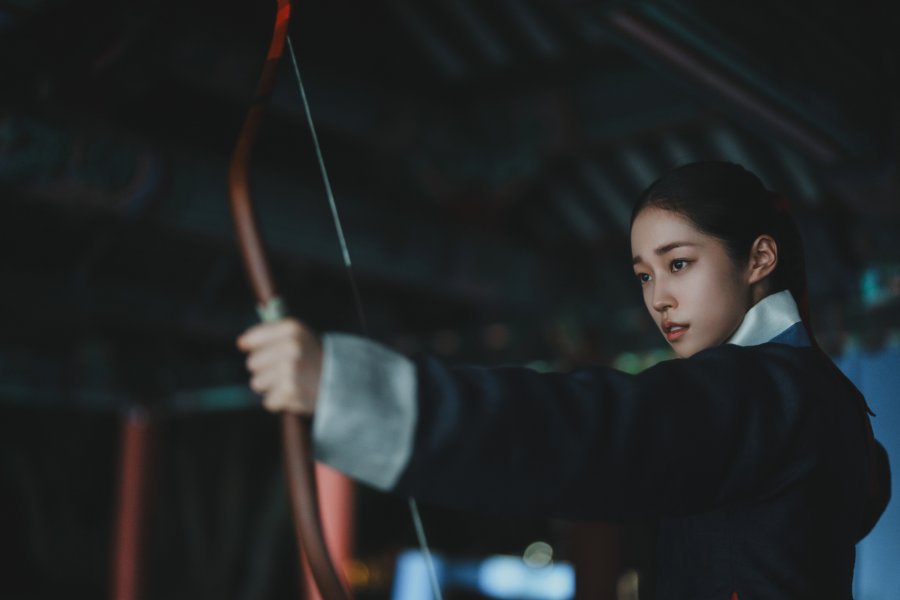
A haughty and unrestrained palace maid, as knowledgeable as a scholar. A person with a strange ability to communicate with ghosts and a special secret as unique as their extraordinary talent.
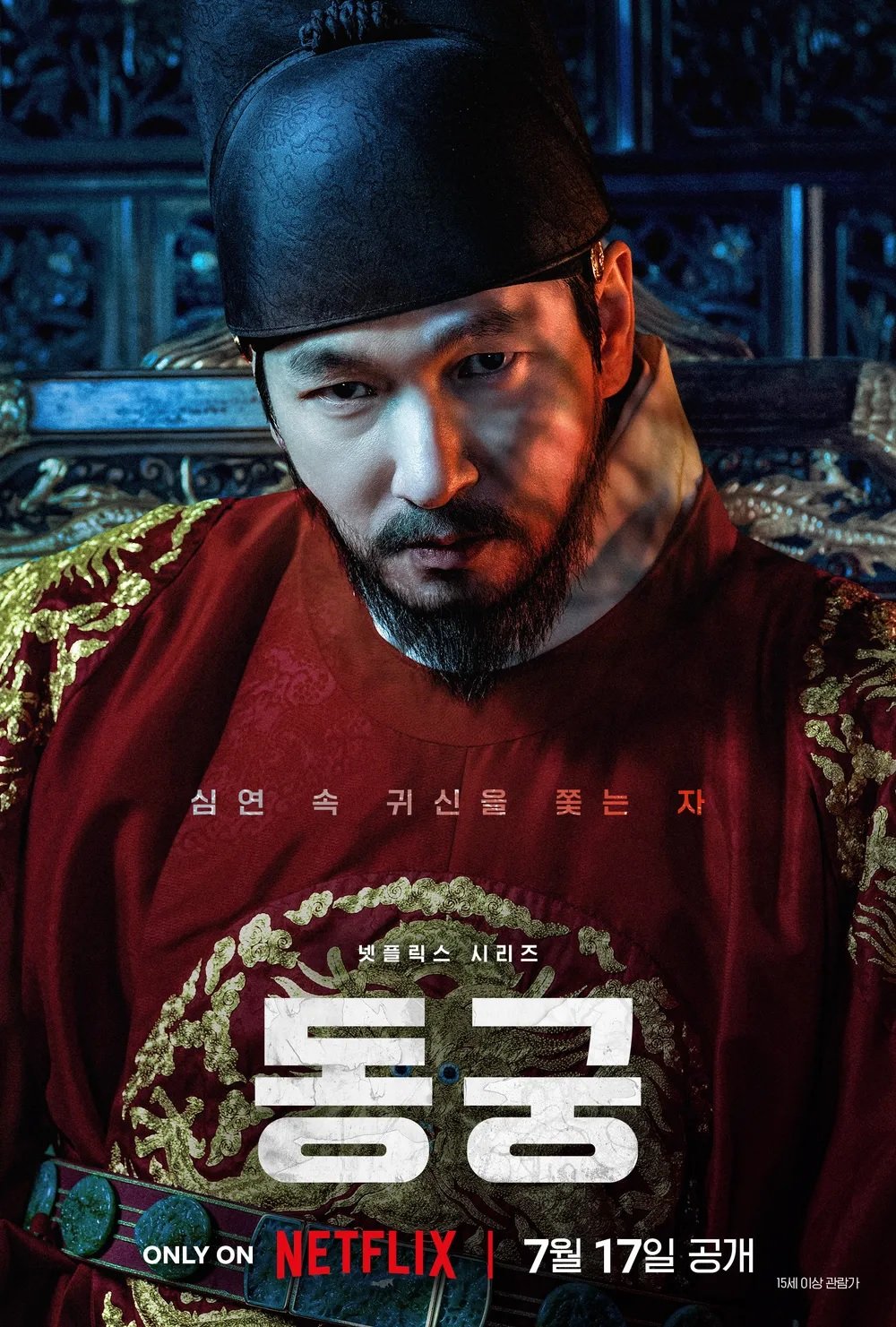
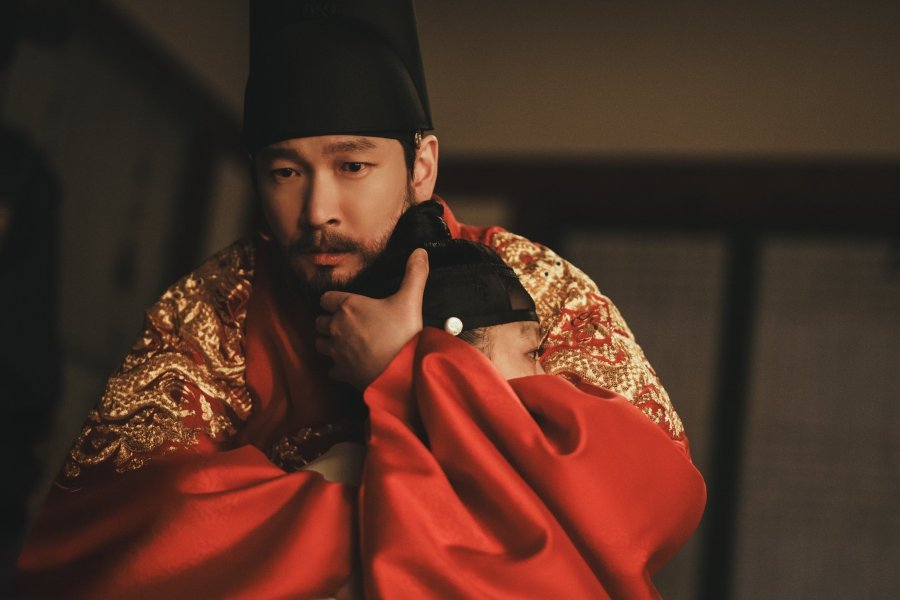
Cho Seung Woo (조승우) as King Ju Sang
The king who chases the shadow of the spirits
The King who secretly summons Gu Cheon and Saeng Gang to lift the curse that haunts the palace.
Review
Story and Plot
Story
The story establishes a striking narrative foundation by structuring two parallel worlds:
- The Living World: A rigid royal court bound by strict social hierarchies, succession anxieties, and political survival.
- The Realm of Gwi: A surreal netherworld where ghosts, spirits, and ancient entities manifest their unyielding grief and fury.
The protagonists, Gu Cheon and Saeng Gang, physically cross into this spirit world to execute their missions; the drama draws a parallel between the supernatural realm and the consequences of real-world historical injustices.
Moreover, there is also the cyclical nature of karmic retribution. For examples:
- The “pond spirit” is not a mindless monster; it is a manifestation of cyclical vengeance born from a slaughter committed by the King 30 years before to secure his own crown.
- The tragic murders of the crown princes represent a literal extraction of karmic debt. The story demonstrates that violence perpetrated by the state to protect its institutions inevitably returns to destroy them.
Ultimately, salvation comes not from raw force, but from his willingness to stop strong-arming the realm and genuinely apologize to the dead.
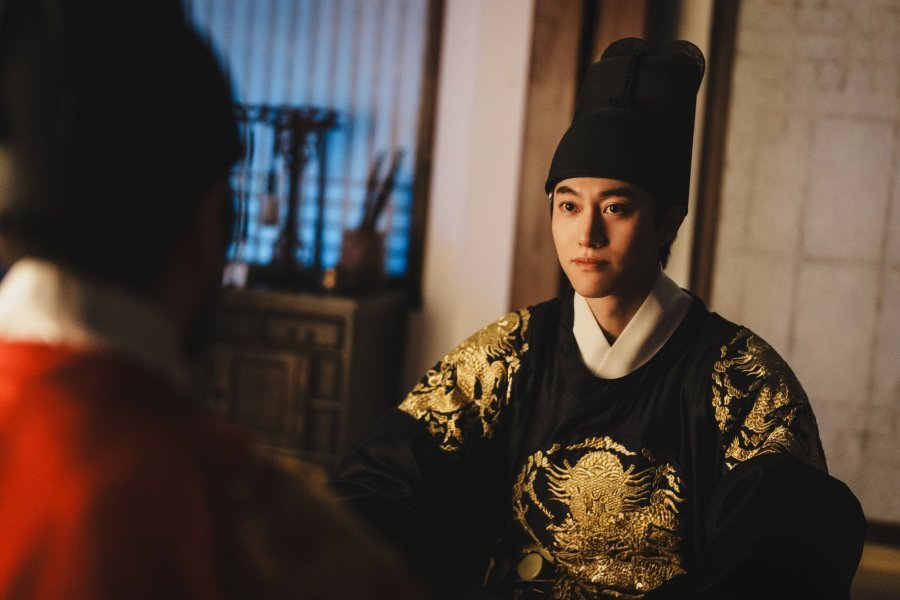
Kwak Dong Yeon as Crown Prince
Plot
While The East Palace excels in atmosphere, mythology, and visual storytelling, its plot is arguably its weakest element. The drama introduces fascinating concepts surrounding the Realm of Gwi, vengeful spirits, and historical guilt, but it does not always develop these ideas with the same care it devotes to its world-building.
One of the most noticeable issues is the presence of plot holes and unanswered questions. Certain supernatural rules seem to change depending on the needs of the story, making it difficult to understand the true limitations of the spirits or the mechanics of the Realm of Gwi. As a result, some conflicts feel resolved through convenience rather than logic.
The pacing can also be uneven. The series spends considerable time establishing its eerie atmosphere and folklore, yet rushes through key revelations in the later episodes. Important character motivations and backstories are sometimes explained too quickly, reducing the emotional impact of major twists. Several supporting characters (for example, Prince Iksan, or the shaman) show promise but receive limited development, leaving their arcs feeling incomplete.
Additionally, the drama occasionally prioritizes symbolism over narrative clarity. Its themes of historical injustice, collective guilt, and unresolved trauma are compelling, but the plot does not always provide enough concrete answers to connect every mystery. Viewers who prefer tightly structured storytelling may find themselves questioning certain events and character decisions.
Characterization and Acting
Characterization
The character writing subverts traditional K-drama heroic tropes to build tension. For examples:
- Gu Cheon is a lazy, cynical outcast who must be coerced into heroism by the blade.
- Saeng Gang views her clairvoyance as an agonizing curse rather than a gift.
- The King rejects the standard “pure good vs. pure evil” dichotomy. He is written with a complex, shadowy inner life.
Across eight episodes, the character arcs of the main leads follow a profound transformation from fear and isolation to profound self-sacrifice and true moral accountability. Each character begins by viewing their supernatural connection or political power as a tool for survival, only to realize that true resolution requires shedding their defenses.
Acting
The East Palace highlights a brilliant interplay between subtle psychological realism and the intense physical demands of a dark fantasy thriller.
Nam Joo Hyuk as Gu Cheon
Nam Joo Hyuk delivers a highly physical yet emotionally restrained performance. Instead of playing a typical, epic warrior, the actor imbues Gu Cheon with a slouching, deeply cynical fatigue. His performance balances impressive, fluid swordplay with a quiet, haunted vulnerability that humanizes a man constantly on the brink of losing his soul to the vengeful spirits.
Roh Yoon Seo as Saeng Gang
Roh Yoon Seo conveys overwhelming terror through highly controlled facial acting. Rather than screaming during horror sequences, she chooses to internalize Saeng Gang’s pain. The actress’s performance shines in scenes where she acts as an emotional mirror to the ghosts, shifting fluidly between intense personal fear and a deep, empathetic sadness for the historical injustices suffered by the spirits.
Cho Seung Woo as The King
Cho Seung Woo described his character as a man “whose true thoughts remain hidden behind multiple layers of masks”. The King commands attention in the palace scenes by projecting the cold, terrifying authority of an absolute monarch while letting cracks of desperation and deep paranoia slip through.
Supporting Characters
- Jang Young Nam as The Queen Dowager gives the most chilling performance in the series, capturing the true horror of human greed.
- Kwak Dong Yeon delivers a masterfully unhinged performance as the tragic, corrupted late Crown Prince, serving as a direct contrast to the heroic main leads.
- Tae In Ho as Prince Ik Sang, the King’s cousin, provides a grounded portrait of institutional rot.
- The Ggeomeoksali: A surprising breakout performance comes from the physical and voice actor behind the little, Labubu-like guardian creature that accompanies Gu Cheon. Ggeomeoksali is depicted as an energy-draining spirit that feeds on the “Yang” (life force) of living things.
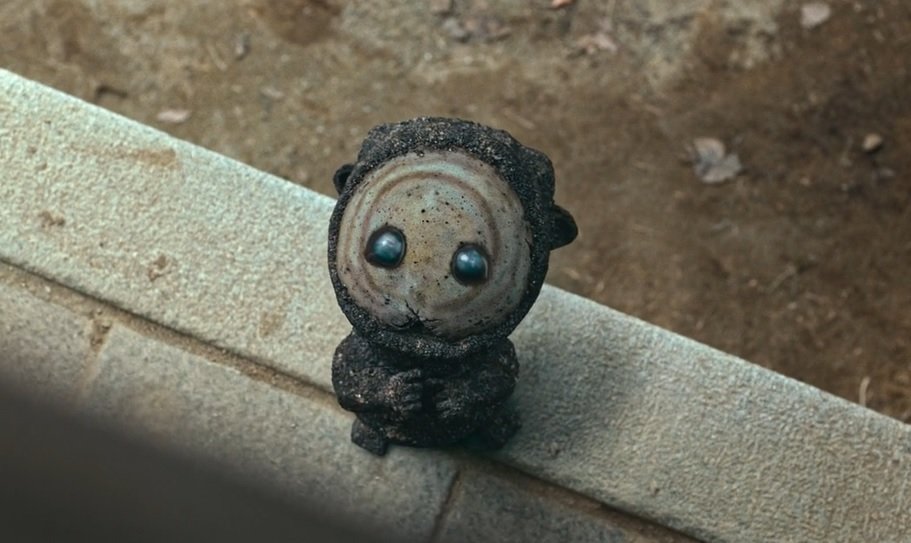
Ggeomeoksali
The Visuals
Cinematography
The cinematography utilizes striking visual contrasts to distinguish the human world from the supernatural Realm of Gwi.
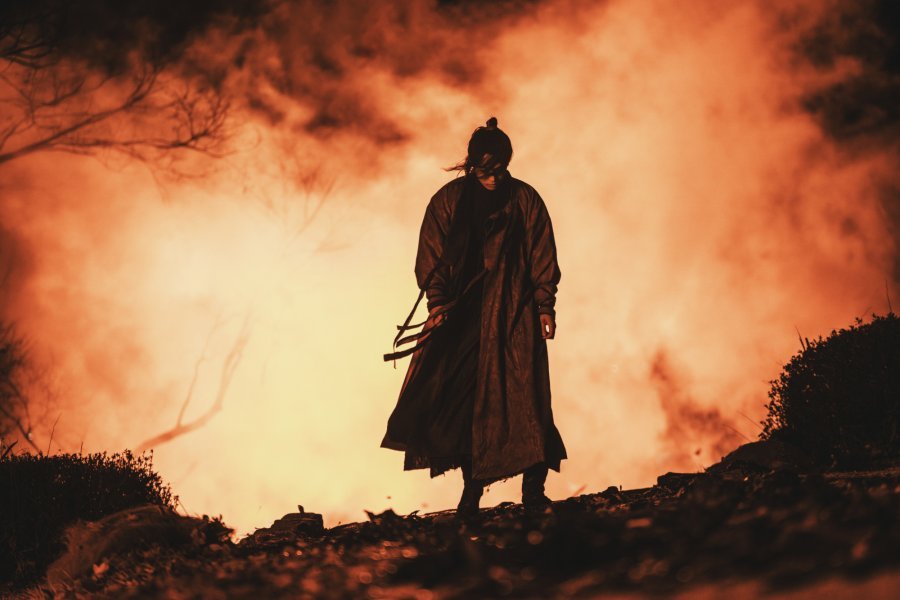
- The Joseon court in the living world is drenched in cool blue, gray, and desaturated tones to reflect emotional detachment and the coldness of the court. The realm of Gwi is bathed in ominous shades of crimson, deep orange, and fiery red to mirror the unyielding rage and boiling grief of the deceased spirits.
- The setup of light and shadow changes entirely depending on which world the leading characters are navigating. The drama uses symmetric, flat, and wide lighting inside the palace. In the realm of Gwi, the light sources frequently take the form of spiritual glows, floating embers, or fractured light. Shadows swallow entire frames to hide horrific creature designs.
- The camerawork shifts to mirror the mental states required to survive both spaces. In the living world, characters are trapped in wide frames that showcase the vast, empty opulence of the palace. In the realm of Gwi, the unstable framing captures the raw terror of a world stripped of logic and human law. When Gu Cheon draws his sword to battle spirits, for example, the camera spins, swoops, and drops to match the erratic, chaotic nature of the ghosts.
- The show uses physical textures to contrast the worlds, capturing a stark visual difference between the two realms. In the living world, it focuses on immaculate, clean surfaces—polished wooden floors, pristine silk robes, and perfectly manicured courtyard gardens. In the realm of Gwi, the screen fills with thick fog, swirling ashes, stagnant swamp water, and rotting organic matter.
Moreover, the visual design of The East Palace utilizes a massive blockbuster budget to blend traditional Korean aesthetics with cutting-edge dark fantasy worldbuilding.
Costume
The wardrobe choices serve as immediate indicators of character psychology and allegiance. For examples:
- King Ju Sang’s royal robes feature hyper-saturated reds and flawless, heavy embroidery.
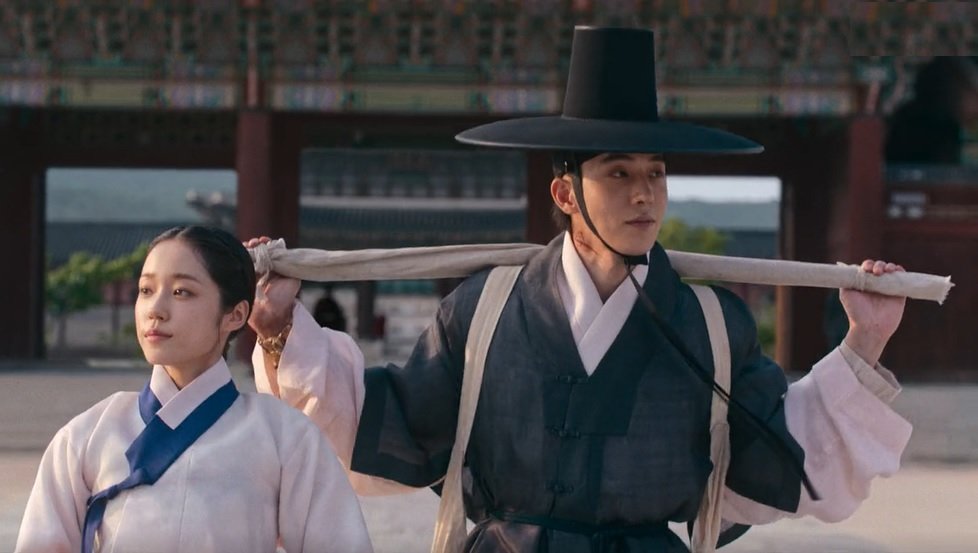
- Gu Cheon’s attire eschews the sleek elegance of traditional historical heroes. His clothing consists of heavy, asymmetric, and heavily textured layers of darkened linen and leather.
- Saeng Gang’s uniformity is clad in the muted, pastel hanbok of a palace maid, making her blend into the background as an invisible observer.
Makeup
The show’s standout achievement lies in its physical transformation of the spirits. For examples:
- The Pond Spirits. The makeup team applied translucent, blue-gray prosthetics and weeping veins around the eyes to simulate a rotting, submerged body.
- The Crown Prince Spirit: The corrupted ak-gwi utilizes pitch-black veining that crawls up the neck and face, signaling spiritual rot. The look avoids flat black paint, opting for glossy, fluid-like layers that appear to pulsate beneath the skin under chiaroscuro lighting.
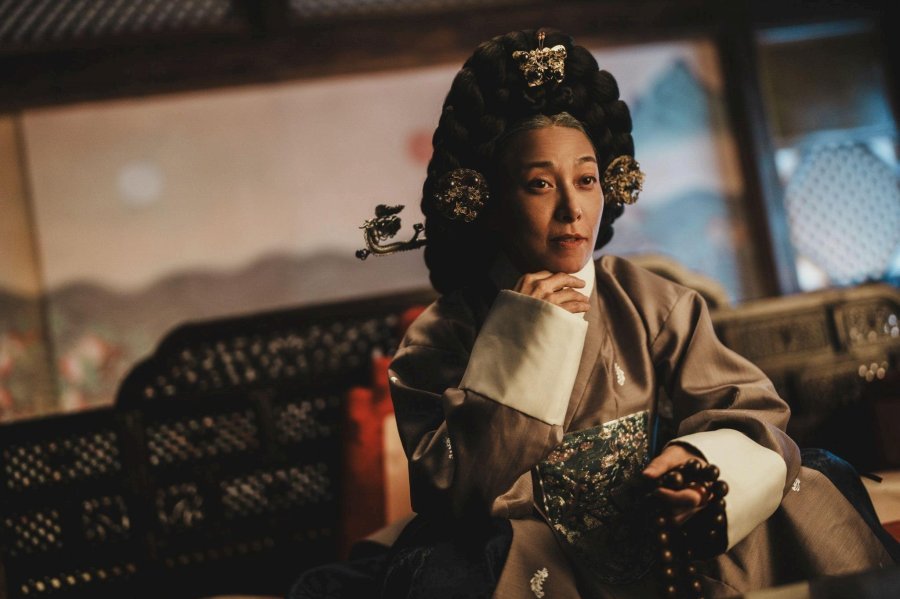
Jang Young Nam as Queen Dowager
Set Design
The physical layout of the palace serves as a visual metaphor for the narrative’s themes of confinement, secrecy, and institutional rot. The living quarters of the Joseon court utilize strict, linear symmetry. Massive wooden pillars, elongated corridors, and towering walls frame the characters, rendering them small, watched, and visually trapped by the state. Conversely, the sets for the spirit realm is fragmented. The architecture is warped, featuring collapsed roofs, cracked stone arches, and decaying shrines.
Props
The props and immediate surroundings are meticulously styled to contrast the pristine facade of royalty with the visceral reality of death. In the living world, props consist of highly reflective lacquerware, smooth porcelain, and immaculate brass mirrors. This clean, gleaming aesthetic suggests a court obsessed with maintaining an unblemished image. In the ghost world, the textures shift to rotting wood, thick layers of ash, creeping moss, and stagnant, blood-tinted pools.
Special Effects and Visual Effects
Production companies Imaginus and Showrunners reject generic green-screen backdrops. Instead, the production leans heavily into a highly tactile, physically constructed environment that amplifies its eerie atmospheric horror.
To make the supernatural encounters feel grounded and visceral, the crew utilized heavy smoke, real falling embers, and waterlogged sets for the pond spirit subplot. Meanwhile, digital visual effects are reserved for the boundaries of the spirit world. When ghosts manifest, the air subtly ripples and light refracts around them—simulating a shimmering heat or underwater effect. This visual cue emphasizes that the spirit world is a distortion of the living realm.
The swordfight scenes are highly stylized. They utilize a mix of wirework, practical stunt choreography, and fast-paced editing variations that give Gu Cheon’s ghost-slaying blade an organic, heavy, and lethal weight rather than a clean, cartoonish feel.
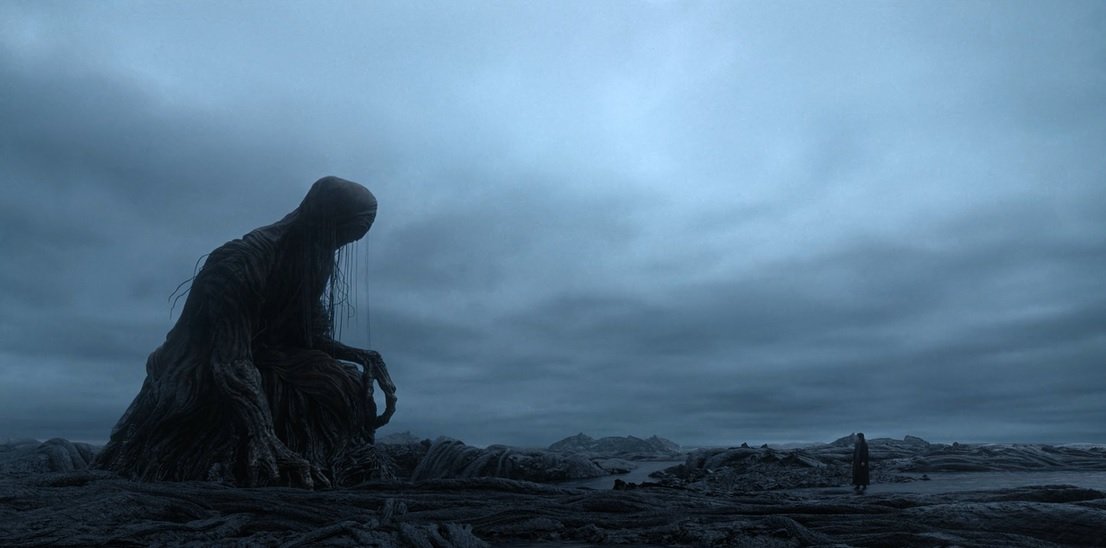
Primordial Gwimae
My Rating
I used my rating system with additional scores of:
- + 0.5 for the story setting: parallel-world realms
- + 1.0 for the characterization and acting
- + 1.0 for the cinematography and visual design
Total rating 8.5/10.
Conclusion
Overall, The East Palace stands out for its unique blend of Korean mythology, supernatural horror, and historical intrigue. Its eerie atmosphere, fascinating folklore, and mysterious storyline create an engaging experience that keeps viewers invested from beginning to end. Despite plot holes and unanswered questions, the drama succeeds in offering something different from the typical historical series. For fans of dark fantasy, ghost stories, and Korean legends, The East Palace is an intriguing journey into a world where the line between myth and reality is frighteningly thin.
Spoilers
What is the ending? [short answer]
Happy ending
How does it end? [long answer]
To gain the ultimate weapon to vanquish the Crown Prince’s soul, Gu Cheon strikes a blood deal with the ancient, Primordial Gwi-mae, which gives him a powerful sword. The primordial gwi-mae is a supreme entity of this kind that governs the spirit underworld and enforces karmic agreements. Gu Cheon drives his sword through the Crown Prince’s soul, destroying the entity.
King Ju Sang grants both Gu Cheon and Saeng Gang total freedom to leave the palace permanently. They depart the capital together to live a peaceful life alongside their ggeomeoksali companion. Though they are happy, Gu-cheon is still bound by an “invisible chain” to the Realm of Gwi, through the sword given by the Primordial Gwi-mae. While he can roam the living world for now, his soul remains permanently claimed by the dark realm.