Introduction
What happens when the adults finally stop looking away from school violence—and start fighting back? Teach You a Lesson turns the traditional school drama on its head with action, revenge, and justice delivered by a government task force that refuses to play by the rules.
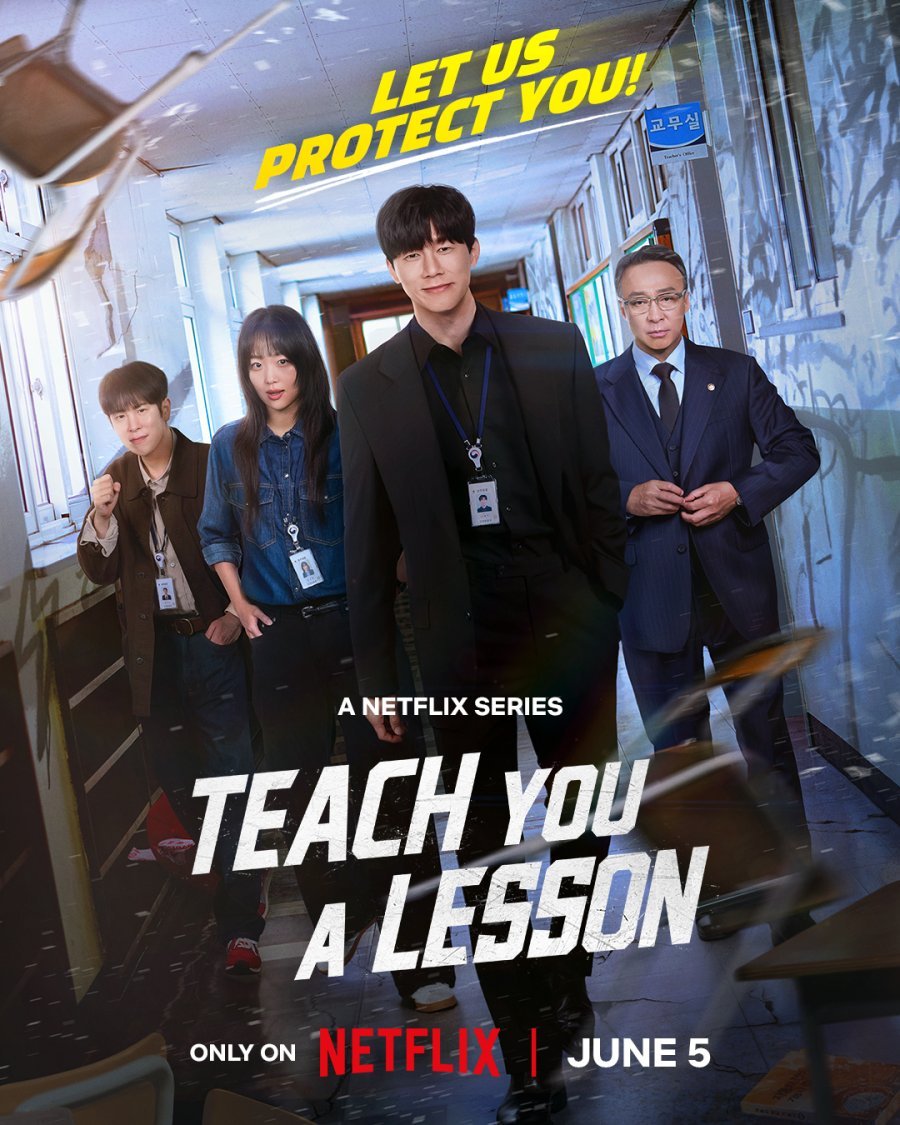
Drama Info
Drama title: Teach You A Lesson (Native title: 참교육)
Alternative title: Chamgyoyuk , Get Schooled , True Education
Genres: Action, Thriller, Comedy, Drama
Aired: 5 June 2026
Episodes: 10 |  Duration: 60 min.
Director: Hong Jong Chan (홍종찬)
Screenwriter: Lee Nam Gyu (이남규)

Adapted from the webtoon “Get Schooled” (참교육) written by Chae Yong Taek (채용택) and illustrated by Han Ga Ram (한가람).

Where to read the Webtoon in English:
Because of the controversial original version, the official English translation of this Webtoon was permanently canceled and removed from the WEBTOON platform in September 2023.
Hard copies of the Webtoon, with the changed storyline, can be purchased online from Amazon or other retailers.

Where to watch: Netflix
OSTs
“Simple As Us” by 4BOUT(어바웃)
“First and Last” by 4BOUT(어바웃)
“Fade Into Forever” by Im Joongwon (임중원) of 손을모아 (sonlmor)
Trailer
Synopsis
When respect collapses in schools, unconventional inspectors arrive to set things right — with sharp, no-nonsense lessons you won’t find in textbooks. (Source: Netflix)
Main Characters
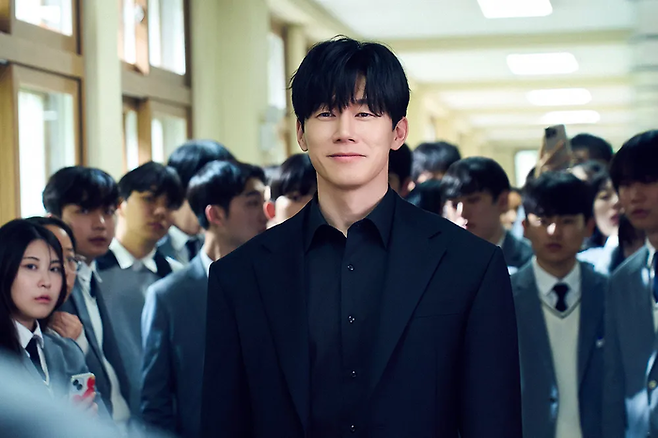
Kim Mu Yeol (김무열) as Na Hwa Jin
ERPB Inspector, formerly classified agent
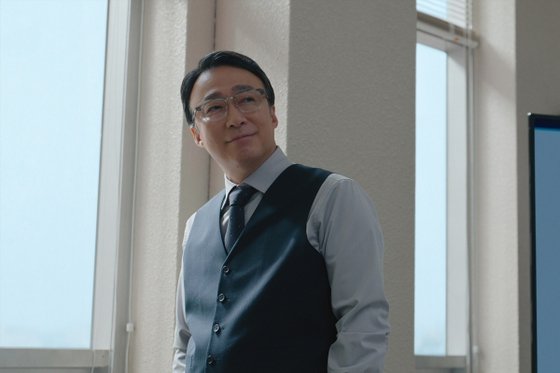
Lee Sung Min (이성민) as Choi Gang Seok
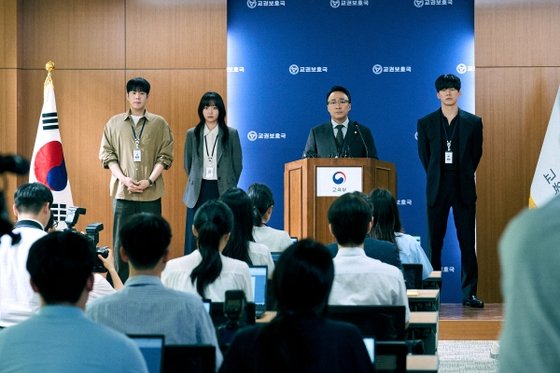
Minister of Education who founded ERPB (Educational Rights Protection Bureau)

Jin Ki Joo (진기주) as Im Han Rim
ERPB Inspector, formerly Na Hwa Jin’s subordinate
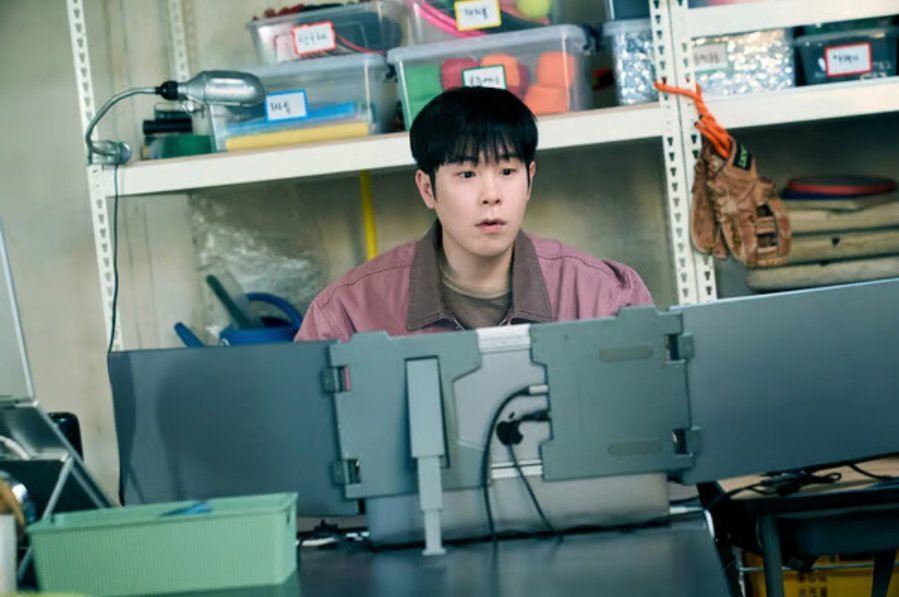
P.O./ (피오) as Bong Geun Dae
Administrative deputy manager for ERPB
Controversies
Many readers of this review, as well as viewers who have already watched the drama, might not know about the controversies of the original work. I will summarize what happened with sources gathered from Wikipedia and other online sources. I didn’t read the Webtoon, either the original or the modified version. That being said, my review in the next section is only about the drama.

The original Chapter 125
In the original Chapter 125 of the Webtoon, a story arc involving multicultural and mixed-race students included characters exchanging racial slurs. Many international readers felt the chapter did not merely depict racism but reinforced racist stereotypes and xenophobic ideas. The backlash was immediate and widespread. As a result, on September 15, 2023, the WEBTOON platform removed the chapter. The creators issued a public apology. The English version was discontinued, and the Korean version went on hiatus. The Korean version returned to Naver on January 8, 2024. The original storyline featured in Chapter 125 is completely scrapped and replaced.
Other controversies
Before the Episode 125 controversy, the series had already drawn domestic and international criticism for physical violence/corporal punishment and for satirizing progressive movements—including a controversial arc that criticized feminism.
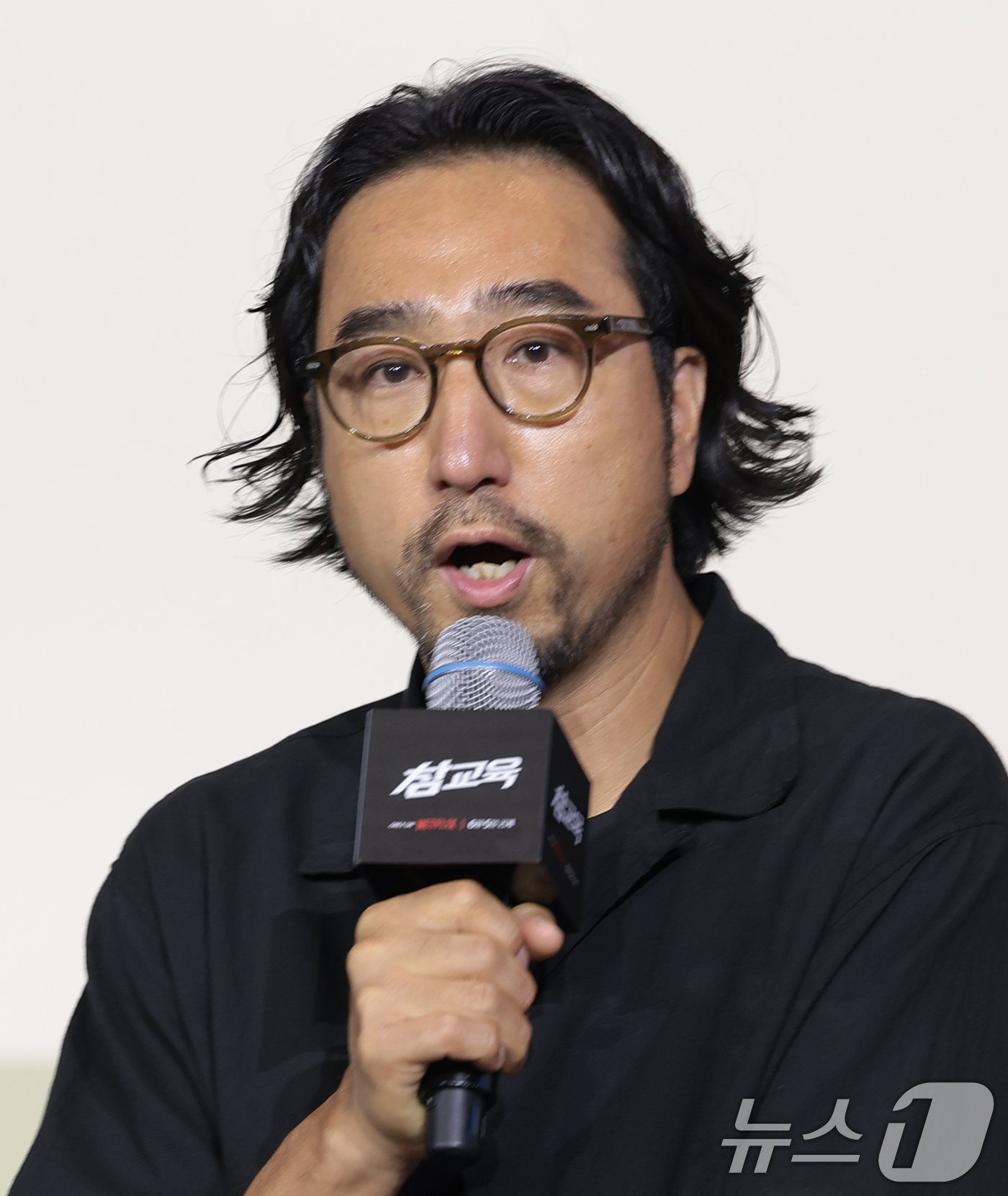
The live-adaptation
In late 2024, the Webtoon’s production studio YLAB Plex finalized the agreement with Netflix to produce the live-action adaptation. Despite the controversies, creators greenlit the adaptation for reasons of the high demand for the revenge and modern power fantasy genres, in resonance with South Korea’s real-life education crisis, to refine/fix the controversial material, and the global expansion for the production studio. The author also stated that certain arcs are based on real-life cases. Read the breakdown courtesy of Cora from MyDramaList.
The live-action series Teach You a Lesson faced pushback and protests from various education groups, including the Korean Teachers and Education Workers Union (전교조 / KTU). When the show finally premiered on Netflix on June 5, 2026, the creators managed to quiet some of the intense backlash. Reviewers and viewers noted that Director Hong Jong Chan deliberately removed the Webtoon’s most problematic elements and toned down the mindless violence to pivot the focus onto institutional failures and parental narcissism.
Teach You a Lesson arrives with plenty of baggage, from controversies surrounding the original material to arguments about the South Korean education system and teacher authority. While those issues are important, my goal here is to review the drama on its own merits.
Let’s start!
Review
Story and Plot
Story
At its core, Teach You a Lesson is less a school drama and more a vigilante justice series set inside schools. Most school/youth dramas focus on the growth of the teenage protagonist, the teacher protagonist who guides the students, or the healing of the bullied protagonist. Teach You a Lesson asks a crucial question of what happens when the system completely fails, and the protagonist (in the form of ERPB) officially/legally decides to force justice instead. With that premise, this drama immediately stands out and separates itself from typical coming-of-age dramas.
The protagonists are not teachers or students. Their functions more like those of an action hero, detectives, or prosecutors. Their roles are to investigate wrongdoing, identify the guilty parties, and deliver consequences. This creates a structure where each case feels like a crime/investigation drama episode rather than a school-life story.
Action
The action isn’t there simply for spectacle—it serves as the story’s method of delivering justice. Unlike most school dramas where conflicts are resolved through conversations, mediation, or emotional breakthroughs, this series often resolves most conflicts through physical confrontations, intimidation tactics, high-pressure interrogations, and sudden interventions by ERPB agents. Their action scenes feel satisfying because they usually arrive after viewers have spent time watching victims suffer and perpetrators abuse their power.
Thriller
The thriller elements are what keep the series from becoming a simple “beat up the bully” show. Most cases involve hidden motives, corrupt adults, manipulated evidence, and unexpected twists. Viewers often try to figure out who the responsible party is, what the cover-up is, and the case’s depth.
Comedy
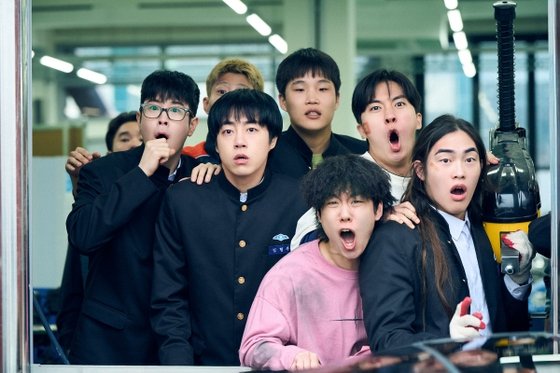
The injection of occasional comedy is surprisingly effective in providing relief from heavy themes and prevents the drama from becoming too dark. The comedy usually comes from irony rather than jokes, for example, the villain’s overconfidence before being exposed and the moments the bullies realize they targeted the wrong person. Team dynamics among ERPB members are also fun to watch.
Drama
The drama genre gives the emotional foundation and the true meaning of the cases. Without emotional stakes, the Teach You a Lesson would feel like an empty drama. The drama builds the audience’s sympathy by showing how the victims suffer in silence, teachers lose control of their classrooms, parents struggle to protect their children, and students are abandoned by the system. These emotional moments are what make viewers want justice in the first place!
Plot
There is almost an arc for each episode, with some major systemic problems along the drama. Most arcs follow a similar pattern:
- The introduction of the injustice which intentionally makes the audience angry.
- System failure, in which teachers, parents, or administrators prove unable or unwilling to solve the problem, which justifies the ERPB’s intervention.
- The ERPB’s investigation that reveals manipulation, cover-ups, or social hypocrisy
- Retribution executed by the ERPB where the guilty party receives punishment. This is the viewer’s emotional payoff that the series is built around.
Credit: Serene Snips @ YouTube
Characters and Acting
One of the biggest challenges for Teach You a Lesson is that its protagonists are not superheroes, but they must carry a premise that is more than common heroes. The drama tried to convince viewers that ERPB, a government agency, can step into schools and enforce justice, despite the broken education system. The drama’s success depends on whether the cast can make their heroic characters feel grounded, despite the fact that they’re not students or teachers.
Na Hwa Jin (Kim Mu Yeol)
Na Hwa Jin is the center of the drama. He is the investigator, enforcer, protector, and a judge of sorts. His role is to enter situations where everyone else has failed and restore order. Because of this, he sometimes feels more like a legendary hero than an ordinary person. To avoid making Na Hwa Jin as an invincible or two-dimensional hero, the screenwriter gave him enough humanity through his frustration with systemic failures, his concern for victims, and his understanding of why people remain silent.
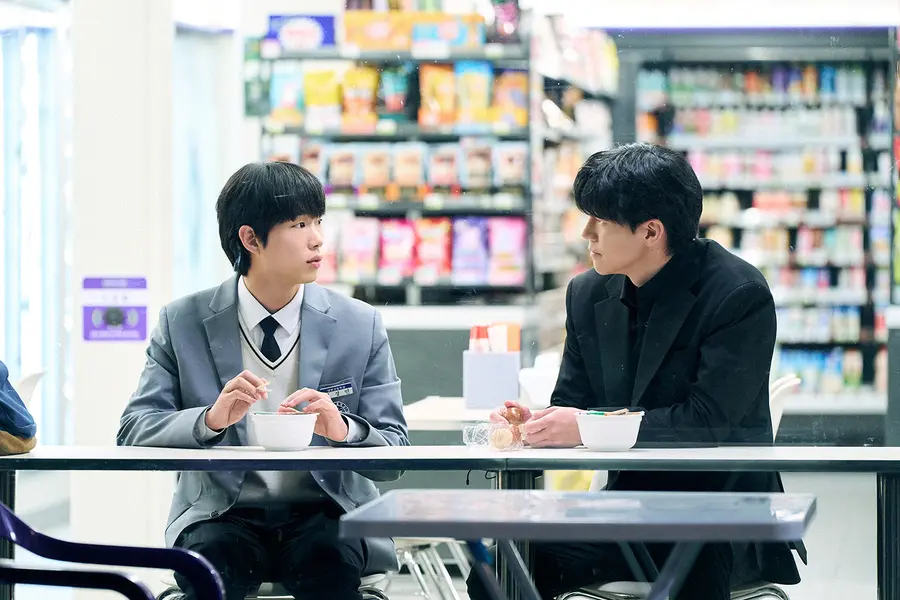
Kim Mu Yeol is particularly well-suited for this role because of his commanding screen presence. Rather than playing Na Hwa Jin as an angry vigilante, he often projects quiet confidence, making the character more intimidating and believable.
Choi Gang Seok (Lee Sung Min)
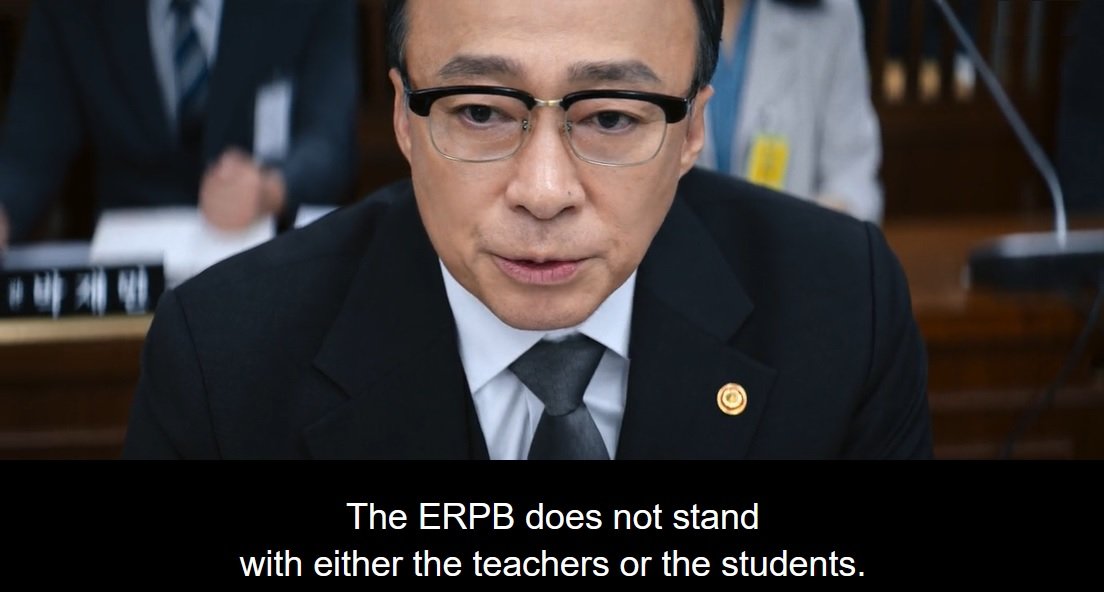
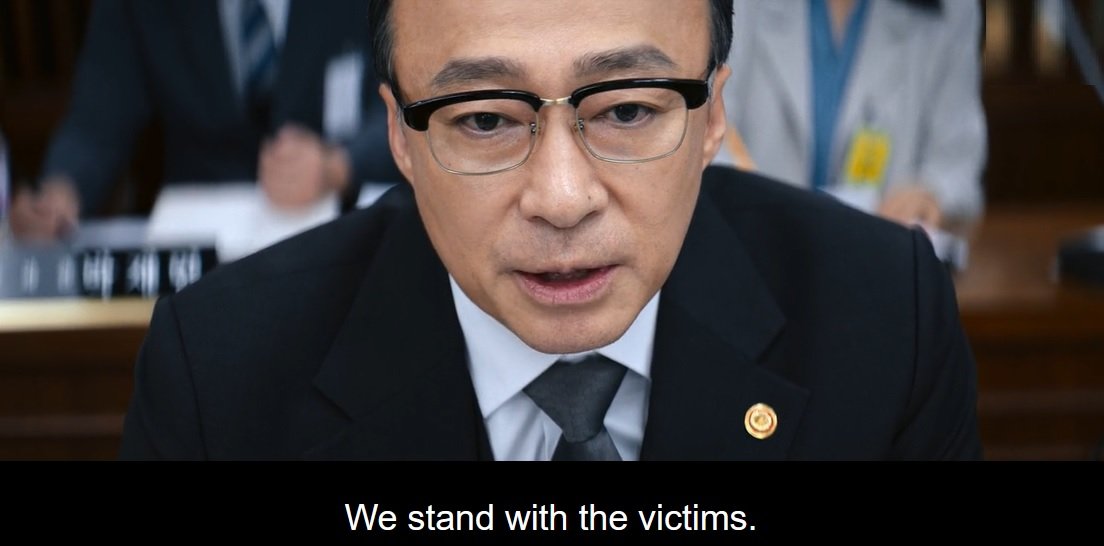
The Minister of Education, Choi Gang Seok, serves as the authority figure overseeing ERPB. His character is important because he connects the individual/local cases to larger institutional/national issues. Many cases are related to the broken education system issues, thus ERPB faces corrupt officials or important manipulative figures in the country.
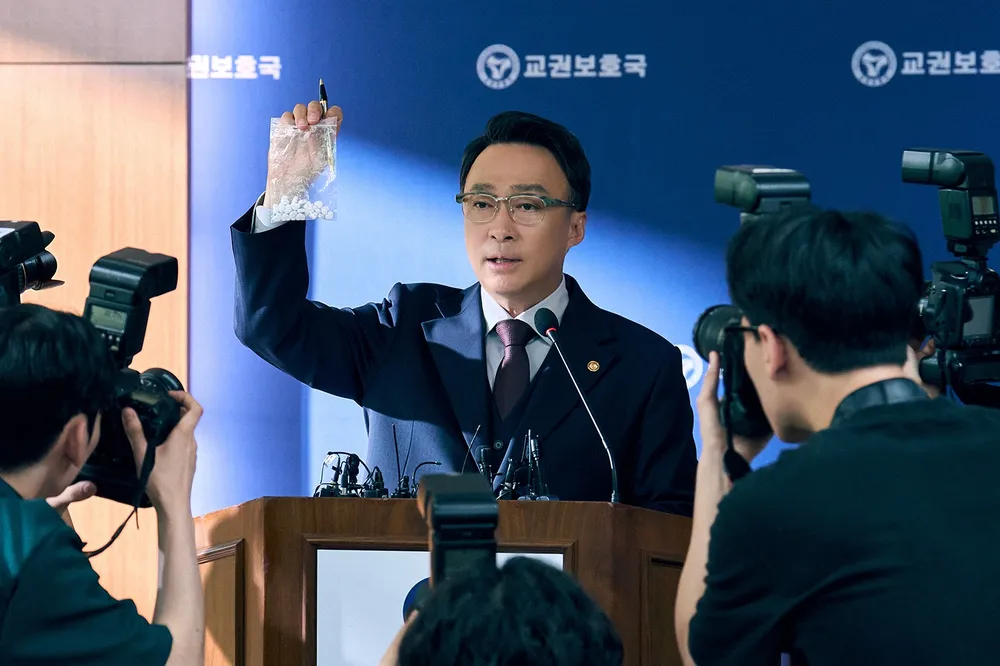
Seasoned actor Lee Sung Min has a reputation for bringing depth and credibility to authority figures. Even when his screen time is limited to the political scenes, he makes Choi Gang Seok character feel layered and realistic. His presence adds weight to the drama’s more serious themes.
Im Han Rim (Jin Ki Joo)
In the Webtoon, Im Han Rim enters the story later as a highly capable agent, so her character is more of a supporting role. In the drama, although she is hired by Na Hwa Jin and is his subordinate as a Special Forces sergeant, her role is that of an equal lead investigator. Im Han Rim balances out the male-dominated vigilante aesthetic. She is framed as a highly rational, tactical leader rather than just physical muscle. Her character especially important when ERPB deals with female victims or female bullies.
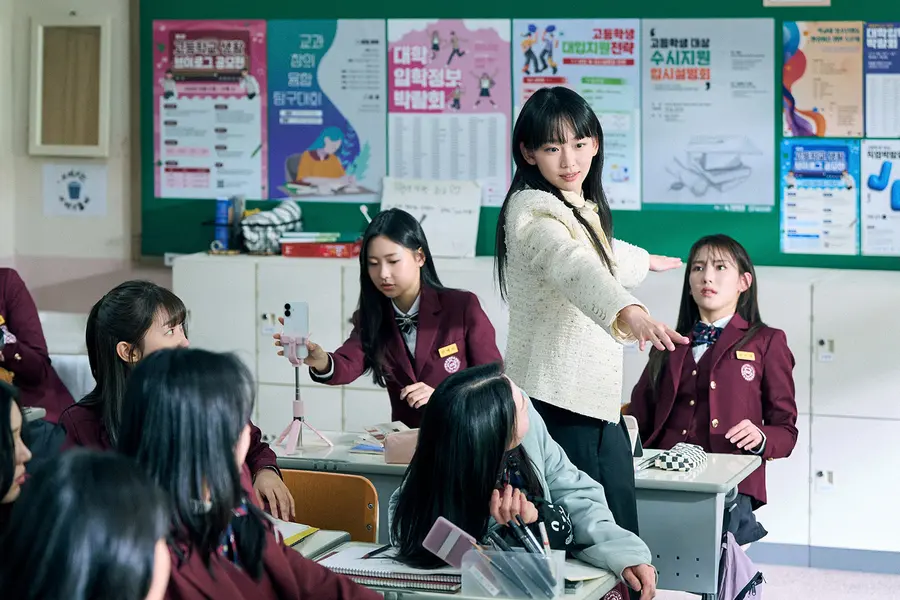
Jin Ki Joo’s natural warmth and enthusiastic work well in scenes involving students and victims. Her performance often grounds the story emotionally and reminds viewers that protecting people—not merely punishing wrongdoers—is the agency’s ultimate purpose.
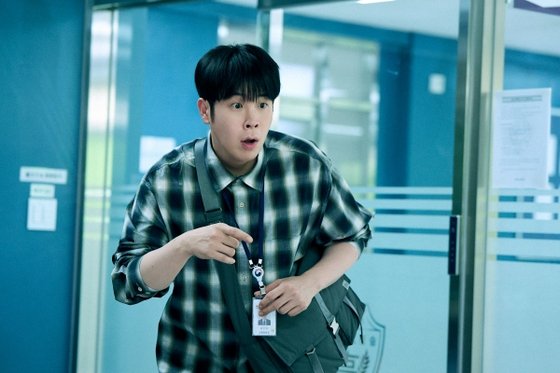
Bong Geun Dae (P.O)
The show introduces an entirely new character who does not exist in the Webtoon: Bong Geun Dae. He is a genius civil servant who graduated from KAIST (Korea Advanced Institute of Science and Technology) early and was hired as the administrative deputy manager for ERPB. He serves as the audience’s entry point into the world of ERPB. Because Bong Geun Dae sometimes disguises himself as a student, he is the most approachable member of the team.
P.O’s natural comedic timing has been one of his strongest assets throughout his acting and variety-show career. Rather than delivering punchlines, he excels at confused reactions, awkward sincerity, and understated humor. His acting style fits Bong Geun Dae perfectly.
Visualization
Cinematography
The visual style generally matches the drama’s themes. Schools are often shown as oppressive places with tense environments where power imbalances are visible. The camera emphasizes intimidating hallways and crowded classrooms. The camera work reinforces the feeling that every school has become a battleground.
The drama’s color palette tends toward muted tones with gray and blue hues and realistic lighting. The schools in Teach You a Lesson often look darker and more serious than the schools in regular school dramas, supporting its thriller atmosphere.
Action Choreography
Teach You a Lesson is not a visual-effects-heavy drama in the way that fantasy, sci-fi, or superhero series are. Its emphasis is on fight choreography, camera work, editing, and impactful stunt work.
The drama uses visual techniques to the ERPB agents feel larger than life. Slow-motion during key confrontations, dramatic impact shots, stylized entrances, and fast editing during fights. The goal is to create the feeling of a vigilante action comic brought to life. The show leans into exaggerated, almost comic-book-like action rather than strict realism.
Special Effects
Teach You a Lesson favors practicality over spectacle in its special effects production design. The costumes reinforce the authority of the ERPB agents, the makeup convincingly portrays the physical and emotional toll of each case, and the props support the drama’s investigative elements. Meanwhile, the realistic school sets transform familiar hallways and classrooms into tense battlegrounds where the series’ conflicts unfold. The result is a grounded visual world of schools that strengthens the drama’s action-thriller atmosphere without distracting from the story.
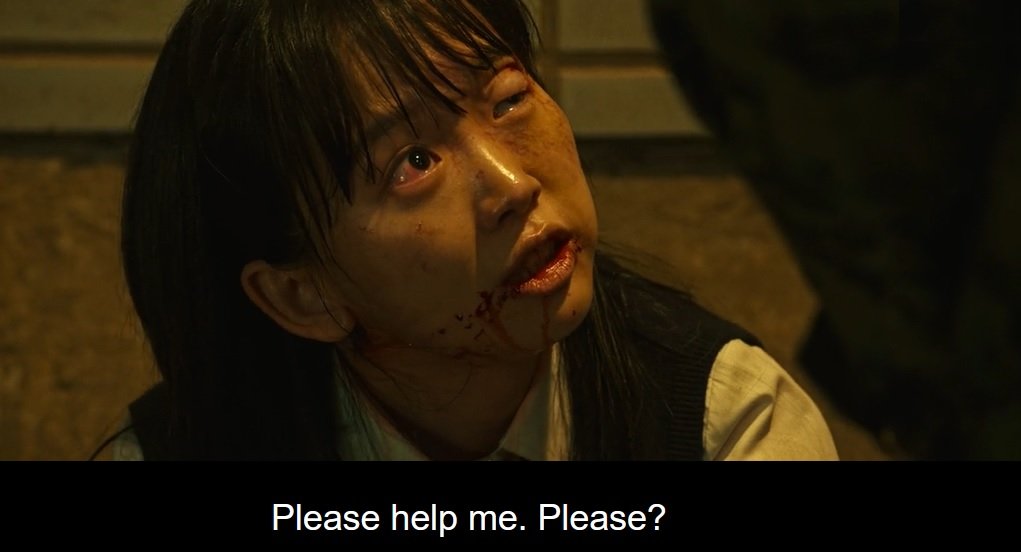
My favorite in the special effects aspect is the makeup. Because the drama deals heavily with bullying and physical confrontations, believable injury makeup is important. The makeup department shines in creating bruises, cuts, swelling, and physical signs of violence. Specifically, the injury makeup on the victims reinforces the emotional impact of each case!
My Critics
- The drama’s one-case-per-episode structure often delivers a satisfying immediate resolution, but the solutions feel temporary rather than transformative. Each episode (or mini-arc) restores order on the surface, yet the underlying problems—systemic neglect, bullying culture, and institutional failure—remain largely unchanged.
- To soften an otherwise heavy drama, the drama hinted romance between Im Han Rim and Bong Geun Dae. However, as a viewer who frequently watches romance dramas, I think their special relationship feels unnecessary. There is limited screen time for the romance development, and their chemistry is not built through shared romantic moments. Besides, their romance is overshadowed by the bullying cases.
My Rating
I used my rating system with additional scores of:
- 1.0 for the interesting theme of justice in broken school/education system
- 1.0 for the vigilante type heroes and acting
- 1.0 for the visualization
Total rating 9.0/10.
Conclusion
Beneath its action-packed confrontations, Teach You a Lesson is a drama about accountability. It explores what happens when institutions fail, when adults abandon their responsibilities, and when victims are left without protection. While its methods are often controversial, the series repeatedly returns to the same question: how far should society go to defend those who cannot defend themselves?





Hello Cho Na,
I just completed watching and re-watching this captivating drama.
Thank you so much for featuring this interesting drama in your website here. I am very grateful.
I am writing now my personal thoughts on it . . .
____________
“Teach You A Lesson”: A Drama with Meaningful Lessons to Learn
This is the first full Korean drama I have watched in 2026. At first, I thought I was simply watching another school-themed K-drama. However, I never expected the story to be this powerful, meaningful, and thought-provoking.
I am writing this review as a former college teacher who has always believed in the power of education to change lives.
As a college teacher to engineering students for several years, I was naturally drawn to its educational theme.
What I discovered was far more than entertainment. Each episode explores issues that continue to challenge schools and society today—bullying, abuse of authority, parental pressure, social media harassment, gambling, drug abuse, academic obsession, juvenile crime, and, above all, the responsibility of adults to guide the next generation.
The main characters—Minister of Education Choi Gang Seok, the founder of the Educational Rights Protection Bureau (ERPB), together with Inspector Na Hwa-Jin, Im Han Rim, and Bong Geun Dae—represent individuals who, despite carrying deep personal grief, never lose sight of education’s true purpose: helping young people become responsible, compassionate, and productive members of society.
Special recognition must also be given to Kim Moo-yul, whose portrayal of Inspector Na Hwa-Jin gave the series both strength and emotional depth. His performance was calm, restrained, and convincing, allowing viewers to feel not only the character’s determination but also the quiet grief he carried throughout the story. Together with the outstanding performances of Lee Sung-min as Minister Choi Gang Seok, Lee Jung-hyun as Im Han Rim, Kim Min as Bong Geun Dae, and the entire cast and production team, they created a drama that was both compelling and deeply meaningful. Their collective dedication transformed an already excellent script into one of the most memorable Korean dramas of the year.
One of the drama’s greatest strengths, in my opinion, is its memorable dialogue. Many of its quotations stayed with me long after each episode ended and inspired me to reflect more deeply on the role of teachers, parents, students, and society. The very first episode immediately captured my heart when Inspector Na Hwa-Jin said:
“In a world where adults are afraid of children, is a world that is nearing its end.”
To me, these words express a timeless truth: a school cannot fulfill its mission when fear replaces mutual respect between students and the adults entrusted to guide them.
Watching this drama also reminded me of my own years in the classroom. During my time as a teacher, respect between students and educators was generally built through trust, discipline, and open communication. Today’s teachers often face new challenges brought about by technology, social media, changing family dynamics, and increasing pressures both inside and outside the classroom. While every generation has its own struggles, the calling of a teacher remains unchanged: not only to impart knowledge, but also to help shape character, inspire responsibility, and nurture hope.
For me, “Teach You A Lesson” is far more than a school drama. It is a thoughtful reflection on the shared responsibility of parents, teachers, students, and society in building a better future. It reminds us that education is not merely about academic success—it is about forming individuals of integrity, compassion, accountability, and respect.
As a former college teacher, I did not simply watch “Teach You A Lesson”. I found myself reflecting on my own years in the classroom, remembering the responsibility entrusted to every educator: not merely to teach subjects, but to help shape character. This drama reminded me that true education begins where knowledge meets responsibility, compassion, and accountability.
Thank you for commenting and sharing your life experience as an educator, Marilina!
Hello Cho Na,
Thank you so much for your appreciation.
I don’t remember if I’ve ever told you that before becoming an accountant at an international law firm here in Canada, I taught Engineering and Accounting students at the college level for almost ten years.
This is my rating: 10/10 for my Best Korean Drama of the Year.
A remarkable drama that not only entertains but also encourages every viewer to reflect on the kind of society we hope to build through education.
Kindest regards,
Marilina
Hi Marilina,
Yes, I think you told me one time that you was a college instructor. I just don’t remember what subjects you taught.
I completely understand why you rated this drama 10/10. It goes beyond entertainment and raised important questions about education, opportunity, and the kind of society we want to create for future generations.
Thank you again for sharing your thoughts. I always enjoy reading your insights.